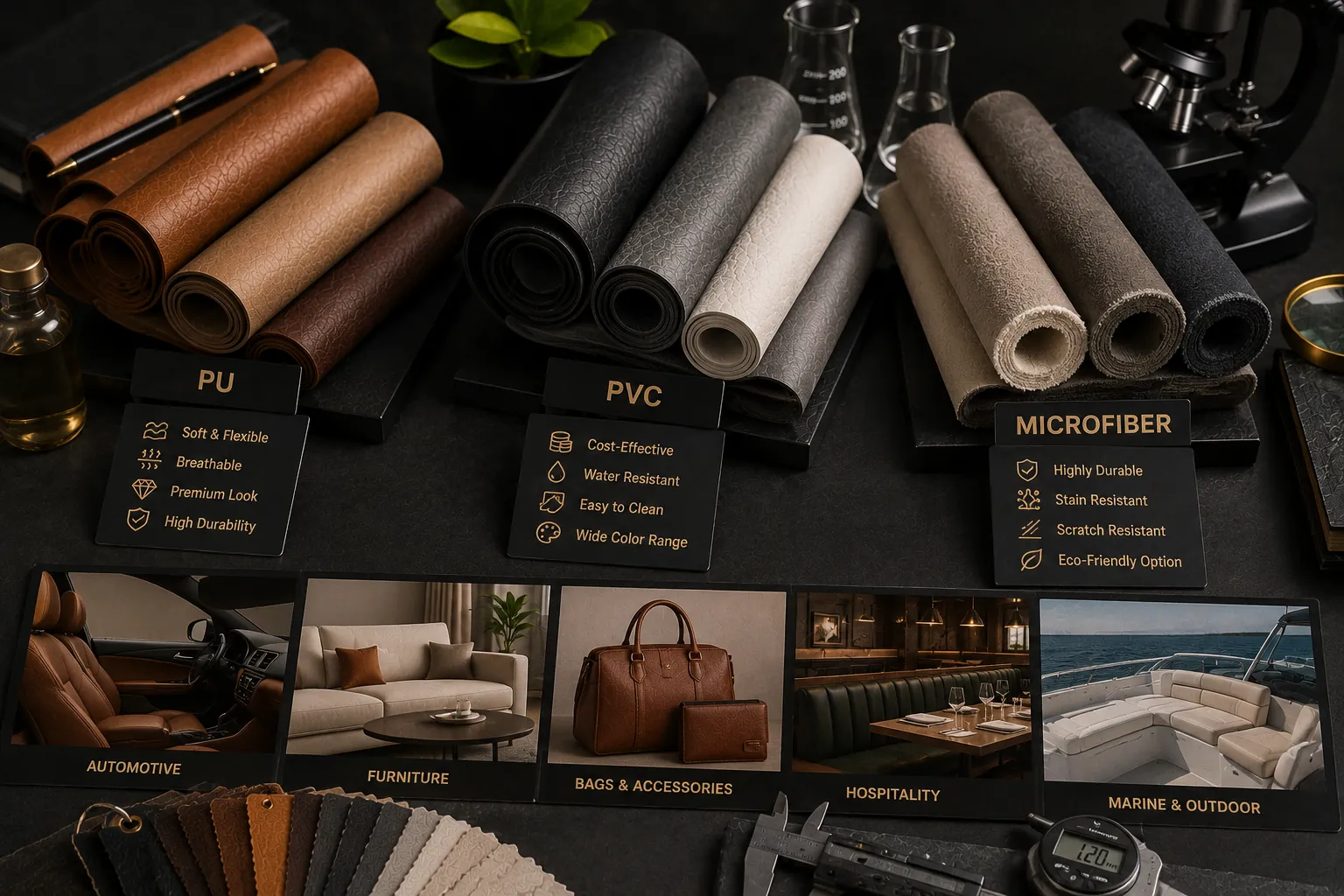
Furniture workshops across Bangkok reach for PVC leather when a sofa collection needs to survive years of scuffing and spills. Automotive upholsterers in Rayong's industrial estates specify PU leather for its lighter weight and softer hand-feel on dashboards and door panels. Marine fabricators turn to microfiber leather when constant salt spray and UV exposure would degrade a standard coating within a single season. Each material solves a different engineering problem, and choosing the wrong one shows up fast: cracking, delamination, or a faded finish inside the first year of use.
PU, PVC, and microfiber leather are not interchangeable stand-ins for genuine hide. They are three distinct polymer systems, each built from a different backing and coating chemistry, each with its own performance ceiling. Knowing what separates them at the material level, not just on the price list, decides whether a product line holds its finish for five years or needs replacing after one. This guide breaks down the differences that matter when sourcing synthetic leather at wholesale volume.
Why the Material Choice Decides Your Product's Lifespan
The backing fabric and coating chemistry of a synthetic leather determine how it ages, not just how it looks on day one. PVC leather uses a polyvinyl chloride coating fused to a woven or knit backing, producing a dense, closed surface that resists punctures, spills, and everyday abrasion. PU leather instead uses a polyurethane coating, generally thinner and more flexible, bonded to a fabric or split-leather base. That construction gives PU a softer feel underhand but a coating layer that is more prone to surface peeling once it has been flexed repeatedly over several years.
Microfiber leather departs from both by starting with a nonwoven base of ultra-fine polyester fibers, needle-punched into a dense mat and impregnated with polyurethane, then finished with a microporous surface layer. This construction gives microfiber leather a fiber structure closer to natural hide and better breathability than either PU or PVC. Footwear brands and premium automotive suppliers favor microfiber for parts that touch skin directly, though the tradeoff is a higher cost per meter than standard PU or PVC sheeting.
What Separates PU, PVC, and Microfiber at the Material Level
Backing and Coating Structure
PVC leather bonds a thick vinyl layer to a polyester or cotton-blend backing, which is why it tends to feel firmer and holds an embossed grain pattern with sharp definition. PU leather uses a thinner polyurethane skin over a similar backing, which softens the hand-feel but reduces the coating's resistance to sustained flexing at seams and stitch lines. Microfiber leather skips a traditional woven backing altogether, relying on its needle-punched fiber mat to provide both structure and softness in a single layer.
Weight, Flexibility, and Hand-Feel
PU leather is the lightest of the three and drapes closest to natural leather, which is why automotive interiors and fashion accessories default to it. PVC leather carries more weight per square meter and flexes less readily, making it better suited to flat or gently curved surfaces such as tabletops, wall panels, and boat seating bases. Microfiber leather sits between the two on weight but matches or exceeds PU on softness, since its fiber structure compresses and recovers similarly to a suede or nubuck hide.
Heat, UV, and Chemical Resistance
In tropical climates such as Thailand, where surface temperatures on dark upholstery can climb well above ambient air temperature under direct sun, coating stability under heat and UV becomes a selection criterion on its own. PVC leather formulated with UV stabilizers resists fading and surface cracking better than untreated PU over multi-year outdoor or semi-outdoor exposure. Microfiber leather's polyurethane impregnation is similarly vulnerable to UV degradation unless the supplier adds a stabilized topcoat, which is why buyers sourcing for marine or automotive use should always confirm UV treatment before ordering, not assume it is standard.
Head-to-Head: Durability, Cost, and Finish
| Attribute | PU Leather | PVC Leather | Microfiber Leather |
| Hand-feel | Soft, close to hide | Firmer, structured | Softest, suede-like |
| Relative cost per meter | Mid-range | Lowest | Highest |
| Abrasion resistance | Moderate | High | High |
| UV and heat stability | Moderate (needs stabilizer) | High when treated | Moderate (needs topcoat) |
| Best surface type | Curved, stitched panels | Flat or structured surfaces | Skin-contact, premium finishes |
| Typical thickness range | 0.6 to 1.2 mm | 0.8 to 1.8 mm | 0.9 to 1.5 mm |
Best Fit by Industry
Furniture and Upholstery
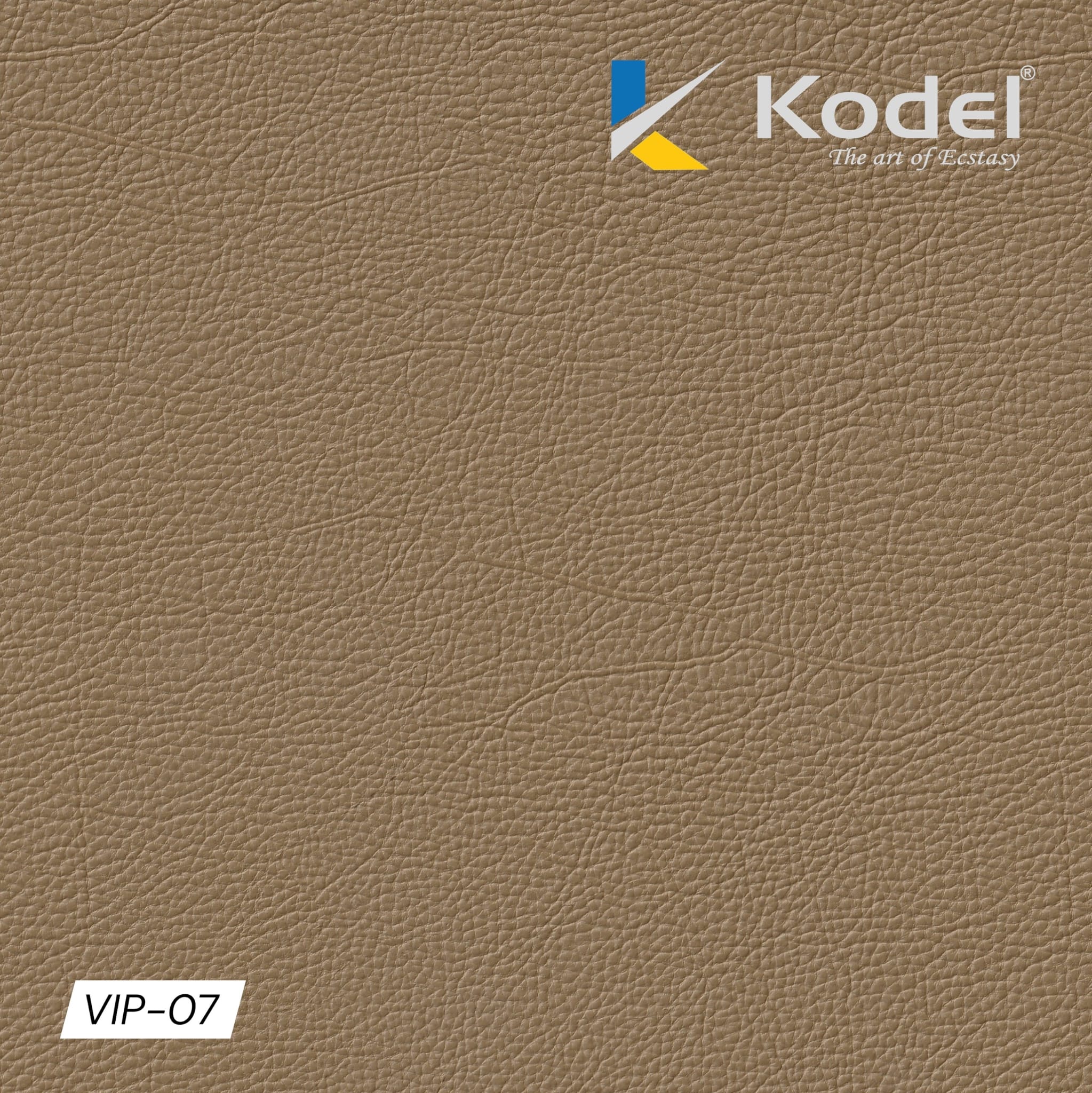
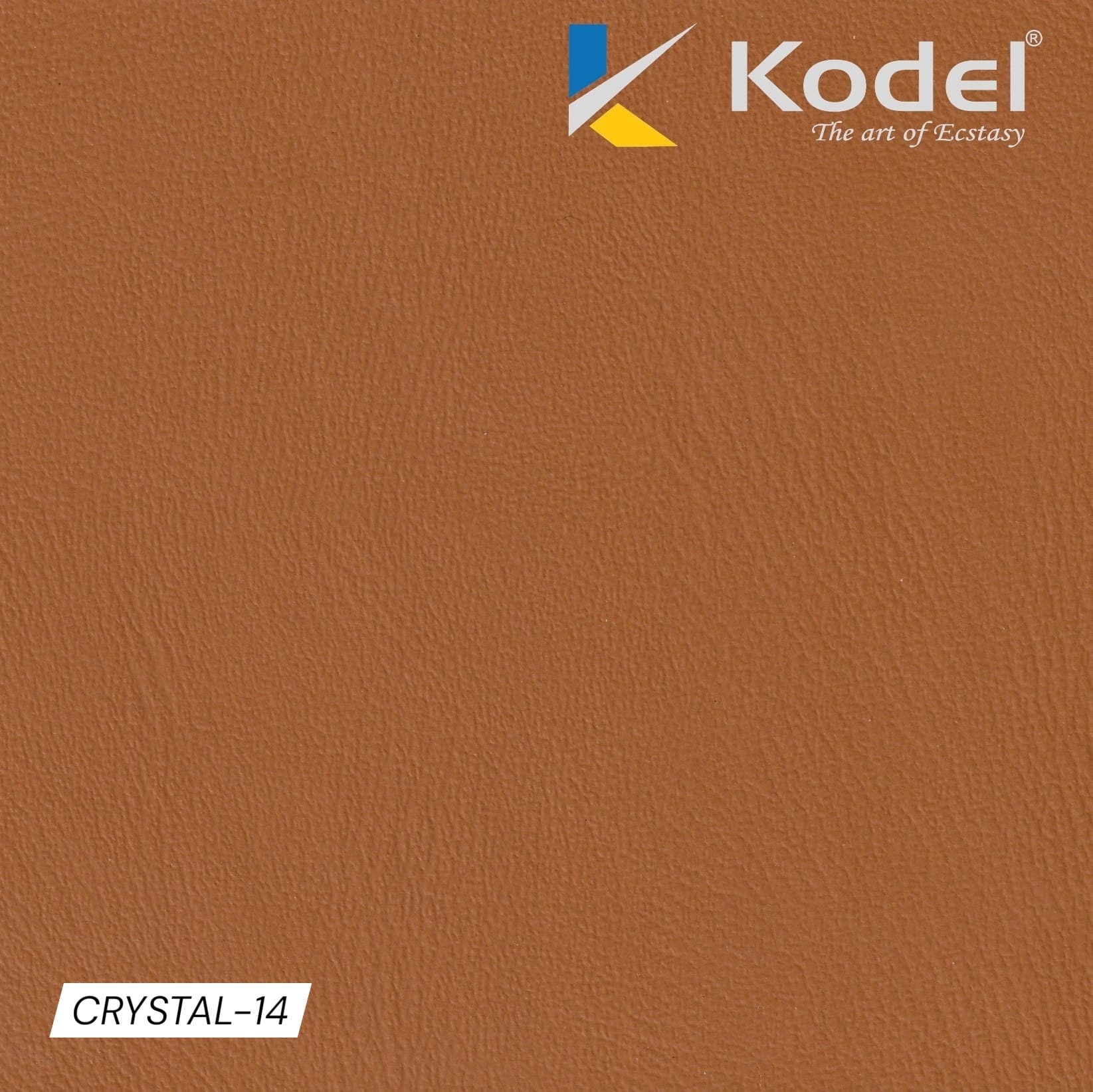
Sofas, dining chairs, and headboards see constant contact abrasion from daily sitting and sliding, which favors PVC leather's denser coating and sharper embossed grain retention. Kodel Decorative's Comfort Leather and Crystal Leather collections are built on this logic, prioritizing surface durability over ultimate softness for high-traffic residential and hospitality furniture.
Automotive Interiors
Dashboards, door cards, and seat bolsters need to flex around tight curves without cracking at the stitch line, which is where PU leather's lighter, more pliable coating earns its place. Collections built for named vehicle platforms, such as Kodel's KTM and Mercedes lines, are engineered around this flexibility requirement first.
Marine Applications
Boat seating and marine trim face constant salt exposure, direct sun, and moisture cycling that standard PU cannot survive long term. UV-stabilized PVC leather, formulated specifically for marine-grade durability, is the standard choice across boat builders sourcing from Thailand's coastal manufacturing base.
Bags, Luggage, and Footwear
Products that sit against skin or clothing for extended periods benefit from microfiber leather's breathability and suede-like texture, particularly for premium bag linings, shoe uppers, and small leather goods where softness and finish quality matter more than raw abrasion resistance.
Cost and MOQ Considerations When Sourcing Each Material
PVC leather generally carries the lowest per-meter cost of the three, which makes it the default choice for buyers prioritizing budget across large furniture or automotive production runs. PU leather sits in the middle of the cost range and is the most widely stocked option across ready-made color and texture libraries, reducing lead time versus custom orders. Microfiber leather commands a premium due to its more complex manufacturing process, so buyers typically reserve it for premium product lines rather than full-range use.
Kodel Decorative stocks more than 200 textures and colors across over 50 collections at its Bangkok showroom, spanning all three material families, which lets buyers compare PU, PVC, and microfiber side by side in person before committing to a wholesale order. Sampling across material types before finalizing a specification is standard practice among established furniture and automotive buyers sourcing from Thailand.
Which Material to Choose and When
Choose PVC leather when the application involves high daily contact abrasion, flat or structured surfaces, and budget sensitivity across large volumes, as in residential furniture, hospitality seating, and marine trim. Choose PU leather when the product needs to flex around curves, stay lightweight, and match the drape of natural hide, as in automotive interiors, bags, and fashion accessories. Choose microfiber leather when skin contact, breathability, and a premium suede-like finish outweigh cost considerations, as in footwear uppers and high-end upholstery lining.
Match the Material, Not the Marketing
The right synthetic leather is never the one with the most attractive sample swatch; it is the one engineered for the specific stress a product will face over its lifespan. Furniture buyers who choose PVC for abrasion resistance, automotive buyers who choose PU for flexibility, and footwear or bag makers who choose microfiber for breathability are all making the same underlying decision: matching coating chemistry to end use rather than defaulting to whichever material is cheapest or most familiar.
As product lines expand across furniture, automotive, marine, and accessories, sourcing from a single supplier that stocks all three material families side by side removes the guesswork from that matching process and shortens the path from sample to production order.
See and Feel the Difference at Kodel Decorative
Kodel Decorative stocks PU, PVC, and microfiber leather across more than 50 collections and 200 textures at its Bangkok showroom, open Monday to Saturday for professional walk-ins. Visit in person to compare materials side by side, or reach out directly to request samples for your industry: call 0 98 005 8863 or email kodeldecorative@gmail.com. Explore the full range at kodeldecorative.com/collection and get in touch to start your next wholesale order.