Switching a product line from animal leather to vegan leather is a bigger decision than swapping a material spec. It touches sourcing, cost structure, marketing claims, and increasingly regulatory and retailer requirements in your target export markets. This guide is written for brand and product teams evaluating the switch for the first time, with a focus on what to check before signing a supply agreement.
Why This Decision Is on More Agendas Than Ever
Consumer demand for cruelty-free and animal-free materials has moved from a niche positioning to a mainstream expectation in several product categories, particularly fashion accessories, footwear, and furniture aimed at younger and export-facing consumers. Retailers in Europe, the UK, and North America increasingly ask brands directly about material sourcing during onboarding, which means the vegan leather question is no longer just a marketing decision it can affect which retail channels a brand can access at all.
What 'Vegan Leather' Actually Means
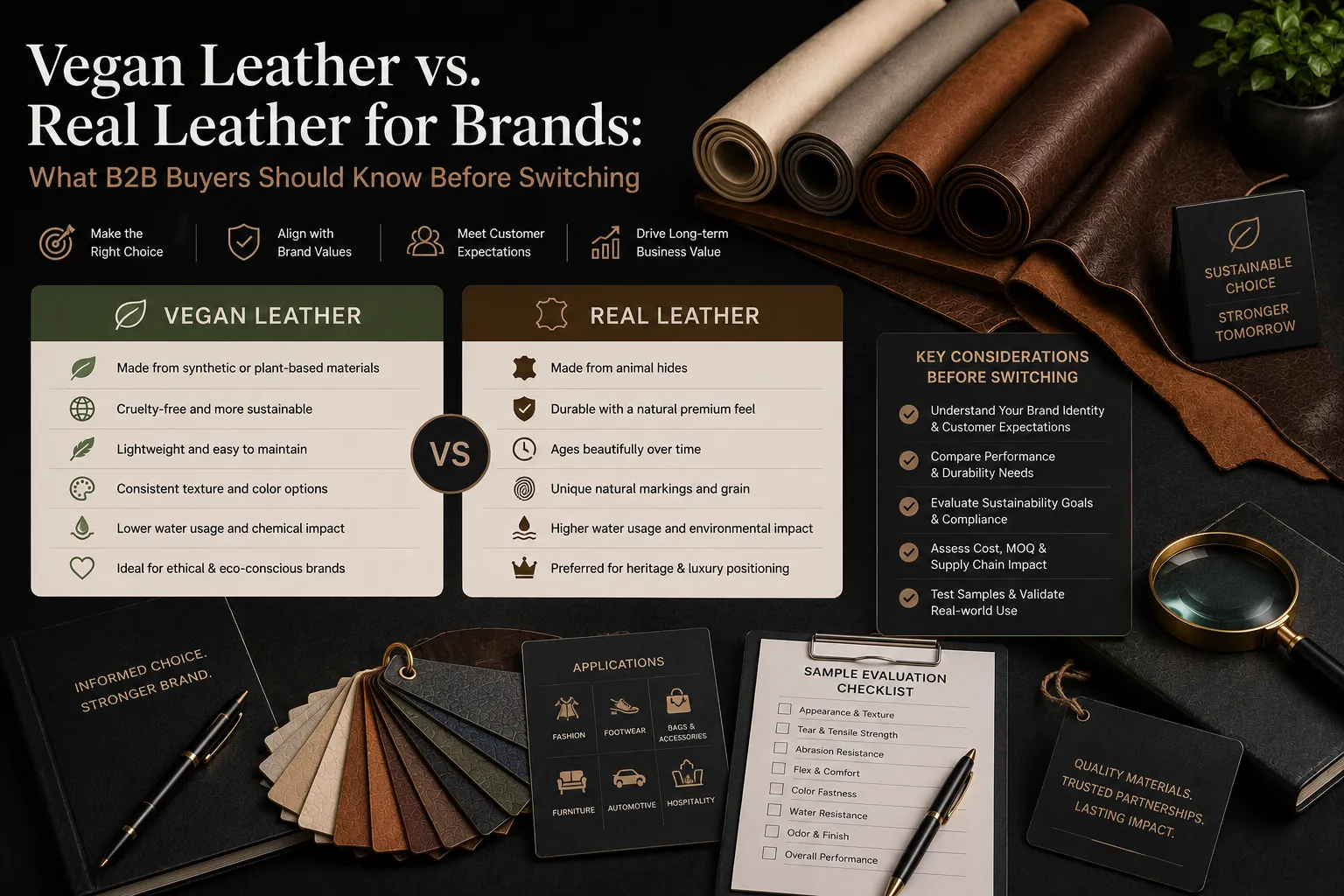
The term covers a range of underlying materials, and buyers should not assume they're all equivalent:
- PU (polyurethane) vegan leather the most common and cost-effective animal-free option, made from a polyurethane coating on a fabric backing
- Bio-based vegan leather formulations incorporating plant-derived or recycled content alongside PU
- PVC-based animal-free leather durable and waterproof, though less favoured by brands prioritising low-VOC positioning
Before specifying 'vegan leather' in a brief to a supplier, clarify which underlying structure you actually need for your application and your sustainability claims.
Cost: What Actually Changes
Vegan leather is often, though not always, less expensive per metre than genuine leather, particularly at mid-range grades. But cost comparisons need to account for the full picture: genuine leather has significant per-hide wastage during cutting due to natural shape and imperfections, while synthetic and vegan leather is supplied in consistent rolls with minimal wastage. For high-volume manufacturers, this consistency can offset a difference in the per-metre price.
Durability: Where the Real Trade-Offs Sit
Modern PU-based vegan leather has closed much of the durability gap with genuine leather for most furniture and accessory applications, but differences remain worth understanding:
- Abrasion resistance: high-grade vegan leather with proper coating now matches mid-tier genuine leather in Martindale rub testing
- Longevity: genuine leather can develop a patina that some buyers see as a feature; vegan leather is engineered for consistent appearance over its service life instead
- Breathability: genuine leather remains ahead here, which matters for products worn against skin for extended periods
Neither material is universally ‘better’ the right choice depends on your product's use case and your customer's expectations.
Certification and Documentation: The Part Buyers Underestimate
If your brand plans to market a product as vegan or cruelty-free, documentation matters as much as the material itself. Retailers and certification bodies increasingly want:
- Written confirmation that no animal-derived inputs are used anywhere in the material, including coatings and finishing agents
- Full traceability documentation from the supplier, not just a verbal assurance
- REACH or equivalent chemical compliance data if the product is destined for EU or UK markets
A supplier who cannot provide this documentation in writing puts your brand's own certification claims at risk — this is one of the most common gaps buyers discover only after a retailer or certifier asks for proof.
Questions to Ask a Vegan Leather Supplier Before You Commit
- Can you provide written traceability documentation confirming no animal-derived inputs?
- What is the base structure of your vegan leather PU, bio-based, or PVC?
- Do you hold REACH or equivalent certification for the markets I'm exporting to?
- Can I get a physical sample to test hand feel and durability before committing to volume?
- What is your minimum order quantity for a new product line versus a repeat order?
A Practical Sourcing Note
Suppliers positioned specifically as a vegan leather B2B supplier rather than a general textile trader who also happens to stock a vegan line tend to have the traceability paperwork and technical familiarity brands need for retailer onboarding. Kodel Decorative, based in Bangkok, is one example of a supplier built around this positioning: 100% animal-free product lines with full traceability documentation supplied alongside export-ready certification. It's the kind of specialisation worth prioritising over a generalist trading company when the material claim is central to your brand story.
Final Word
Switching to vegan leather is rarely just a material substitution it's a claim your brand will make publicly, and that claim needs to survive scrutiny from retailers, certifiers, and increasingly informed consumers. Choose a supplier who can back the material with documentation, not just a sample swatch.