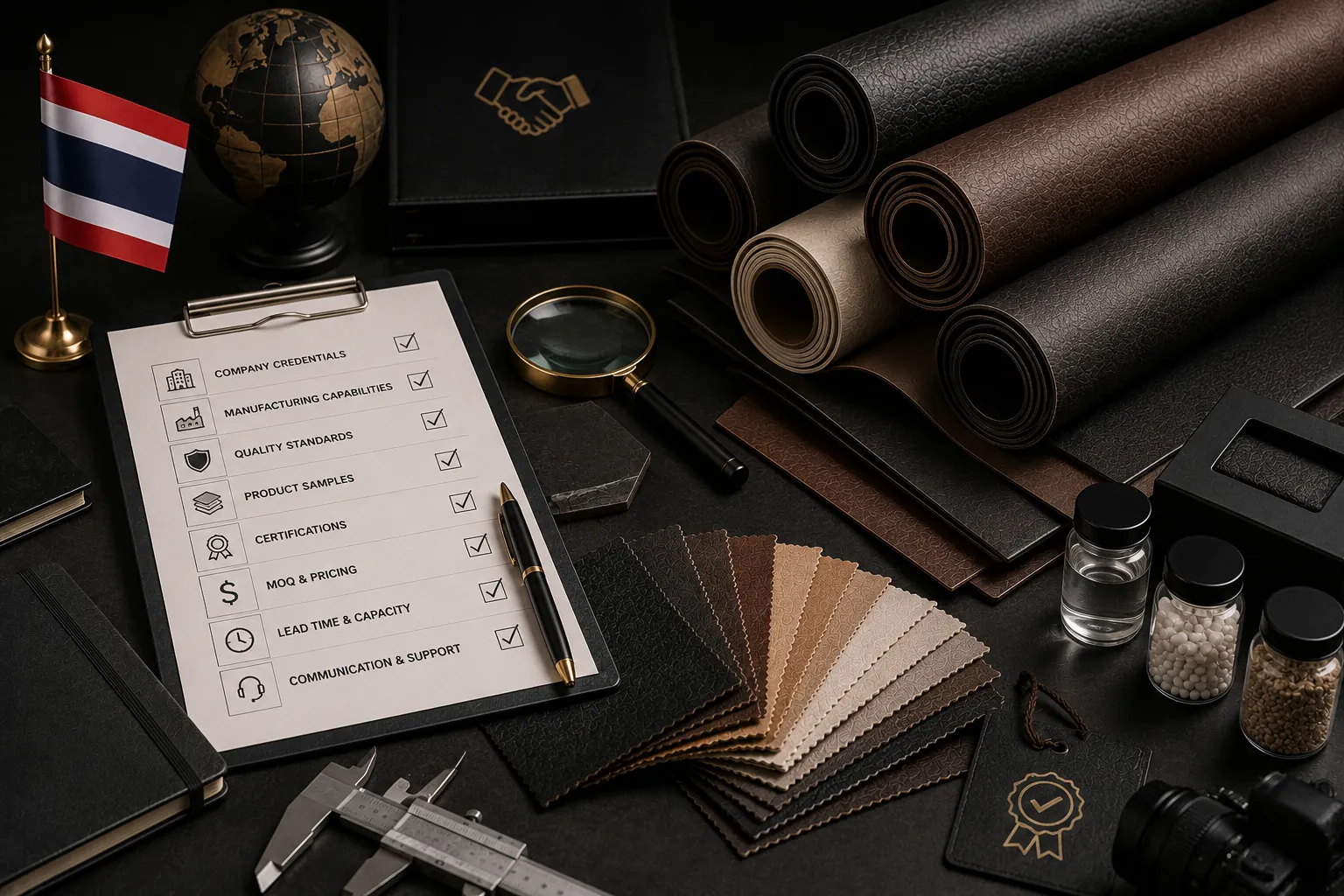
A furniture importer who skips factory verification can discover a mismatched batch color only after a container has already cleared customs. An automotive buyer who does not confirm phthalate-free certification can fail a client audit months into a supply contract. A hospitality group that never requests physical samples can find out a supplier's photographed texture does not match the shipped roll. Every one of these outcomes traces back to a vetting step that was skipped, not a supplier that was inherently unreliable.
Thailand's synthetic leather manufacturing base spans everything from established factories with in-house testing labs to smaller trading operations that resell stock from unnamed third parties. Vetting a supplier properly, before placing a wholesale order, means verifying the factory itself, checking documented certifications, testing physical samples, and confirming production terms in writing. This guide walks through each step in the order a serious buyer should follow it.
Why Supplier Vetting Matters Before You Commit to an Order
Synthetic leather orders typically involve container-level volumes, meaning a specification error or quality shortfall is not a small loss to absorb. A single miscommunicated thickness tolerance or an unstabilized coating batch can affect an entire production run of furniture or automotive parts before the defect is even noticed. Vetting the supplier upfront, rather than relying on a catalog and a quote, shifts the risk detection point from after delivery to before the purchase order is signed.
Buyers who source recurring volumes, rather than a one-time trial order, have the most to lose from an unvetted relationship, since supply disruptions or quality drift compound across repeat shipments. Treating supplier vetting as a one-time gate before the first order, and then a recurring check on subsequent orders, is standard procedure among established furniture, automotive, and marine buyers sourcing from Thailand.
Start With Factory Verification, Not Price Quotes
A competitive quote means nothing if the sender is a trading intermediary reselling unverified stock rather than a manufacturer with direct production control. Ask directly whether the company operates its own coating and finishing lines, or whether it sources finished rolls from other factories and adds a margin. A manufacturer with in-house production, such as Kodel Decorative's flagship Bangkok facility, can speak to specific coating formulations, backing materials, and finishing processes in detail, while a pure trading company generally cannot go beyond what is printed on a spec sheet.
Confirm the Physical Address and Production Capacity
Request the factory's physical address and, where feasible, arrange a showroom or facility visit before finalizing a large order. Kodel Decorative's showroom at 55 Soi Lat Ya 2, Lat Ya Road, Khlong San, Bangkok, is open for professional walk-ins Monday through Saturday specifically so buyers can verify stock, texture, and production scale in person rather than relying on photographs alone.
Check Certifications: REACH, Phthalate-Free, and Fire Ratings
REACH compliance confirms that a synthetic leather does not contain restricted chemical substances above the thresholds set by the European Union's chemical regulation framework, which matters for any buyer exporting finished goods into EU or EU-adjacent markets. Phthalate-free certification specifically addresses plasticizers historically used in PVC coatings, which several markets now restrict in consumer-facing furniture and automotive products.
Ask for Fire Rating Documentation for Furniture and Automotive Use
Furniture destined for hospitality or commercial use, and automotive interior trim, frequently require documented fire retardancy ratings such as BS 5852 or FMVSS 302 depending on the destination market. A supplier that cannot produce test certificates on request, rather than simply claiming compliance verbally, has not completed the documentation a serious buyer needs for their own regulatory file.
Request Physical Samples Before Any Bulk Commitment
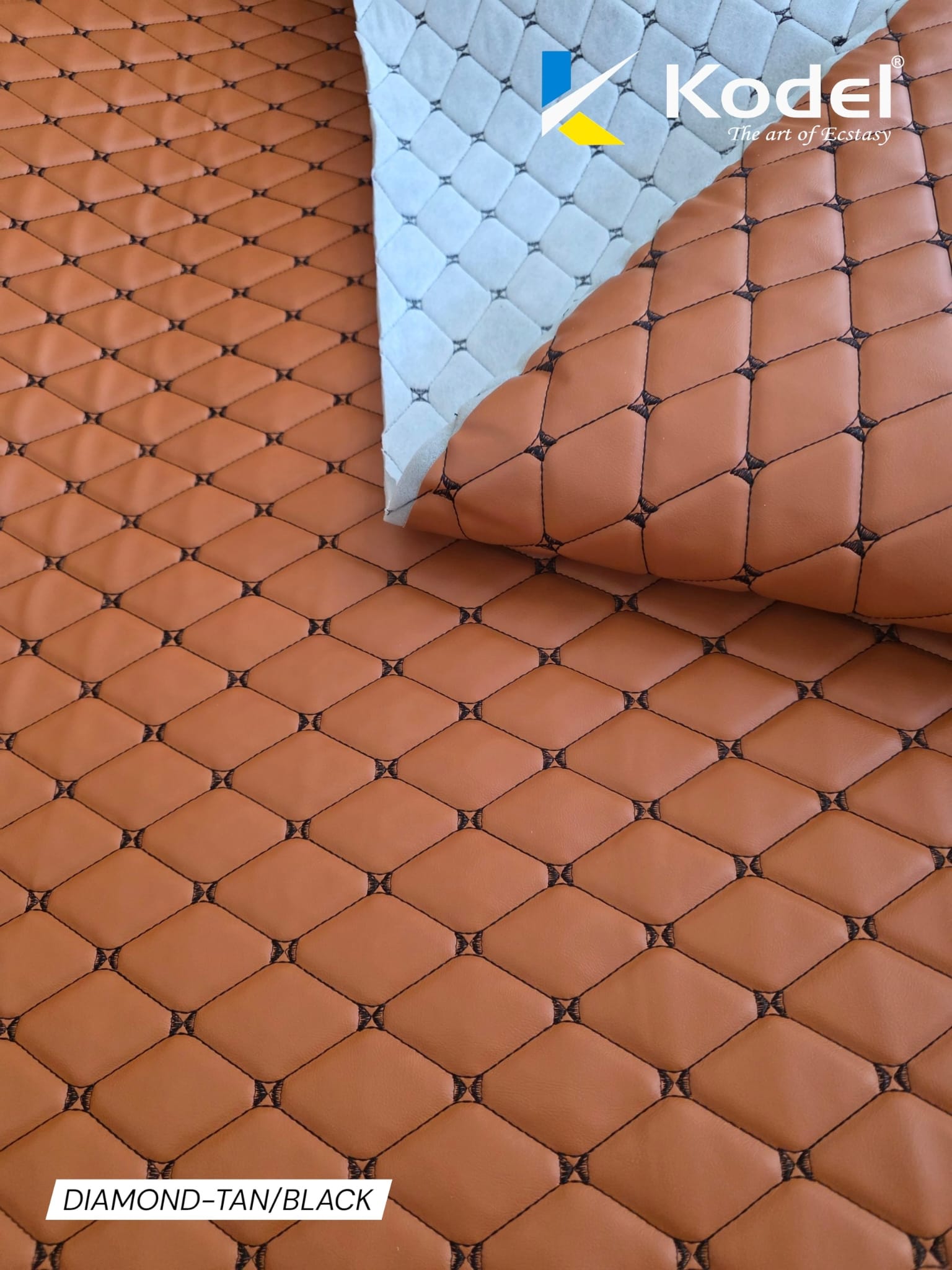
Photographs and digital swatches cannot convey coating thickness, hand-feel, or how a texture behaves under flex, which is why physical samples are non-negotiable before a bulk order. Request cut samples large enough to test stitching, folding, and abrasion behavior rather than small color chips meant only to confirm shade.
Test for Batch Consistency Across Multiple Sample Requests
Request the same texture and color code on two separate occasions, weeks apart, and compare the samples directly for color and thickness consistency. A supplier with reliable batch control will return near-identical samples; noticeable drift between two supposedly identical sample requests is an early warning sign of quality control gaps that will worsen at production volume.
Ask About MOQ, Lead Time, and OEM Flexibility
Minimum order quantities vary widely across Thai synthetic leather suppliers, and a supplier unwilling to disclose MOQ, lead time, and payment terms clearly and in writing before a formal quote is a sign of disorganized operations rather than flexible service. Confirm whether custom colors, embossing patterns, or backing specifications are available as OEM options, and at what minimum volume, since this affects whether a supplier can support a private-label product line versus off-the-shelf stock only.
Get Terms in Writing, Not Just Verbal Assurances
Every commitment on lead time, sample turnaround, and defect tolerance should appear in a written quotation or pro forma invoice before payment. Verbal assurances that are not reflected in the paperwork are not enforceable if a dispute arises later in the relationship.
Red Flags That Signal a Risky Supplier
A supplier that refuses a factory or showroom visit, cannot produce certification documents on request, or pushes for full payment before any sample has been evaluated is signaling risk that a buyer should not absorb on a first order. Pricing that sits dramatically below every other quote in the market, without a clear explanation such as an off-cut sale or discontinued color, often indicates a shortcut somewhere in materials or process rather than genuine efficiency.
Inconsistent responses about backing material, coating type, or country of origin across different conversations with the same supplier also indicate a trading intermediary reselling stock from multiple unverified sources rather than a single accountable manufacturer.
What Comes Next Once You've Chosen a Supplier
Once a supplier has passed factory verification, certification checks, and sample testing, the next step is a documented trial order at a smaller volume than the intended full production run. This trial order confirms that production-scale output matches sample quality before a buyer commits to container-level volumes on a recurring basis.
Vet Once, Order With Confidence
Every step in this process, from factory verification through sample testing to written terms, exists to move risk detection earlier in the buying process rather than discovering it in a delivered container. Buyers who treat vetting as a formality rather than a gate tend to repeat the same costly mistakes across multiple orders, while buyers who complete each step once tend to build supplier relationships that hold steady across years of repeat volume.
The extra week spent verifying certifications and testing samples is small against the cost of a production run built on the wrong material.
Start Your Vetting Process at Kodel Decorative
Kodel Decorative operates its own manufacturing and finishing facility in Bangkok, with a showroom open Monday to Saturday for factory and product verification in person. Request certifications, physical samples, and written MOQ terms directly: call 0 98 005 8863 or email kodeldecorative@gmail.com. Visit kodeldecorative.com/collection to browse the current range before your next wholesale order.