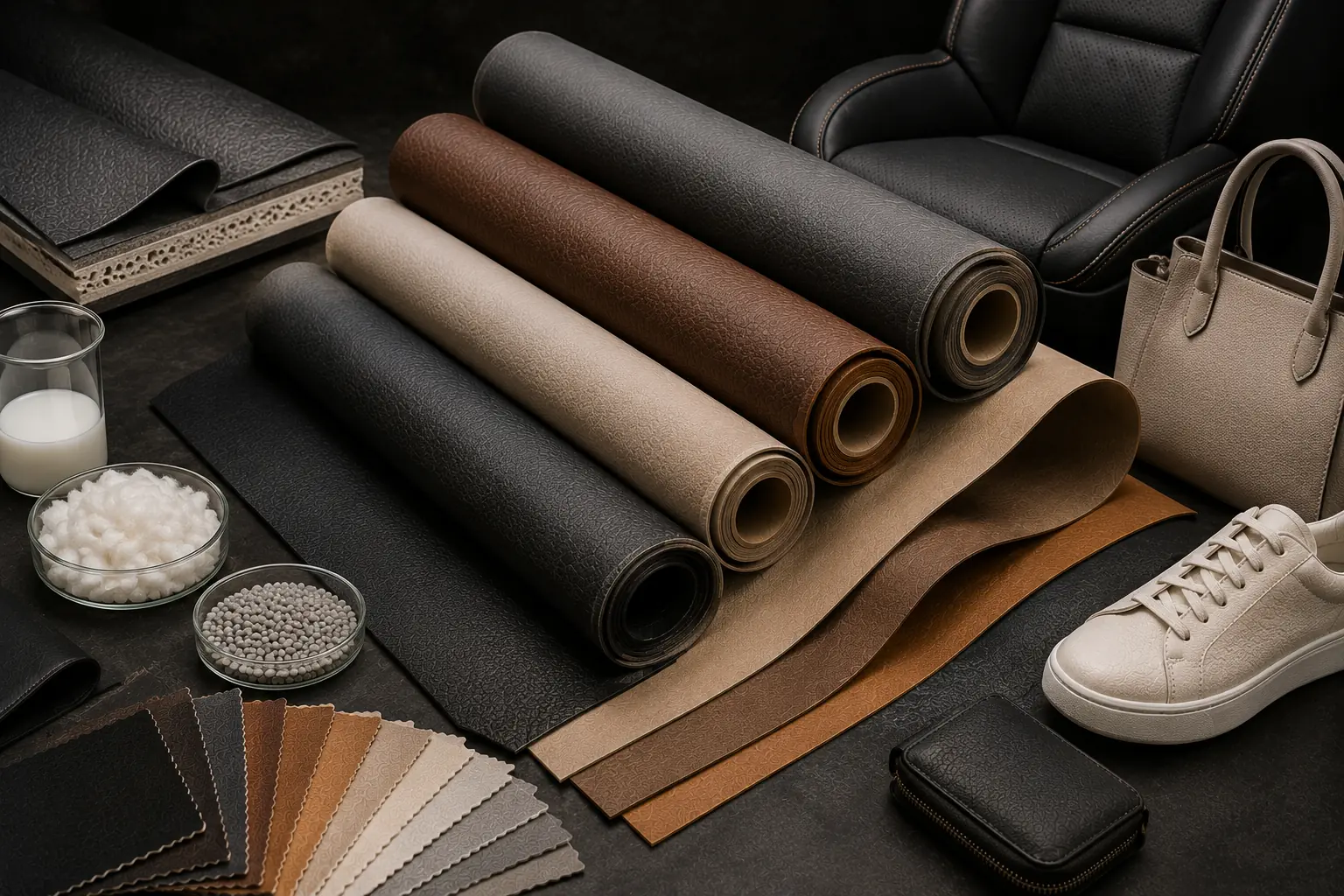
A footwear brand replaces a genuine suede upper with microfiber leather and finds the finished shoe both lighter and more consistent across production batches. An automotive interior supplier swaps a standard PU coating for microfiber on a headrest panel to solve a recurring skin-contact comfort complaint. A furniture brand markets a new sofa line as fully animal-free without sacrificing the soft hand-feel customers associate with premium hide. In each case, the material behind the shift is the same: microfiber leather, a synthetic leather category still unfamiliar to many buyers despite growing fast across furniture, footwear, and automotive interiors.
Microfiber leather is not simply a premium grade of PU leather; it uses an entirely different base construction that produces a fiber structure closer to natural hide than any other synthetic alternative. Understanding what it is, how it is made, and where it genuinely outperforms PU and PVC helps buyers decide whether the higher cost is a specification requirement or an unnecessary upgrade for their product.
What Microfiber Leather Actually Is
Microfiber leather is a synthetic leather built from a nonwoven mat of ultra-fine polyester fibers, impregnated with polyurethane and finished with a microporous surface layer that mimics the grain structure of natural hide. Unlike PU or PVC leather, which coat a polyurethane or vinyl layer onto a woven fabric backing, microfiber leather's fiber mat itself provides the structure, giving it a cross-section closer to genuine leather's collagen fiber network than to a coated textile.
This structural difference is why microfiber leather feels, breathes, and ages more like natural hide than PU or PVC do, and why it commands a higher price per meter across most Thai and regional synthetic leather suppliers.
How Microfiber Leather Is Made
Production starts with sea-island or splittable polyester fibers, each many times finer than a human hair, which are needle-punched into a dense nonwoven mat. The mat is then impregnated with polyurethane resin to bind the fibers and add structural integrity, followed by a buffing or sanding step that opens the surface fibers into a suede-like nap or, for smooth finishes, a coated microporous skin layer.
The result is a material with genuine porosity running through its structure rather than a single surface coating, which is the mechanical basis for microfiber leather's breathability advantage over PU and PVC alternatives.
Why Brands Are Switching to Microfiber Leather
Footwear brands are switching because microfiber leather's fiber structure allows it to be skived, stitched, and shaped similarly to genuine leather, reducing the retooling needed when converting a genuine-leather shoe pattern to a synthetic alternative. Automotive interior suppliers are switching for skin-contact comfort on parts like headrests and armrests, where breathability reduces the clammy feel that PU coatings can produce over long drives in hot climates.
Consumer brands positioning products as animal-free are also switching because microfiber leather's premium hand-feel avoids the compromise customers associate with cheaper vegan leather alternatives, letting a brand market sustainability credentials without a noticeable drop in perceived product quality.
Where Microfiber Leather Performs Best
Footwear uppers, premium bag linings, and automotive skin-contact panels are the applications where microfiber leather's specific advantages, breathability and hide-like structure, translate into a real functional benefit rather than a marketing upgrade. Furniture and accessory lines aiming for a genuine-suede aesthetic without the maintenance burden of real suede also benefit from microfiber's finish quality.
Limitations to Weigh Before You Switch
Microfiber leather costs more per meter than PU or PVC across most suppliers, which makes it a harder specification to justify for high-volume, budget-sensitive product lines such as standard residential furniture. Its polyurethane impregnation is also vulnerable to UV degradation similarly to PU leather, so buyers sourcing for outdoor or marine use should confirm a stabilized topcoat rather than assuming microfiber automatically outperforms PVC in sun exposure.
A Material Worth the Upgrade, When It Fits
Microfiber leather is not a universal upgrade over PU or PVC; it is a specific solution for applications where breathability and a hide-like structure produce a measurable functional benefit, such as footwear uppers and skin-contact automotive panels. Brands switching to it for marketing reasons alone, without a functional requirement behind the decision, often find the added cost hard to justify against a standard PU or PVC alternative that performs identically for their actual use case.
The brands getting the most value from microfiber leather are the ones that started with the problem, comfort, breathability, or a genuine-hide aesthetic, rather than starting with the material and looking for a use case afterward.
Feel the Difference Before You Specify
Kodel Decorative stocks microfiber leather alongside PU and PVC collections at its Bangkok showroom, so you can compare hand-feel and finish in person before specifying a material. Request samples directly: call 0 98 005 8863 or email kodeldecorative@gmail.com. Browse the current range at kodeldecorative.com/collection.