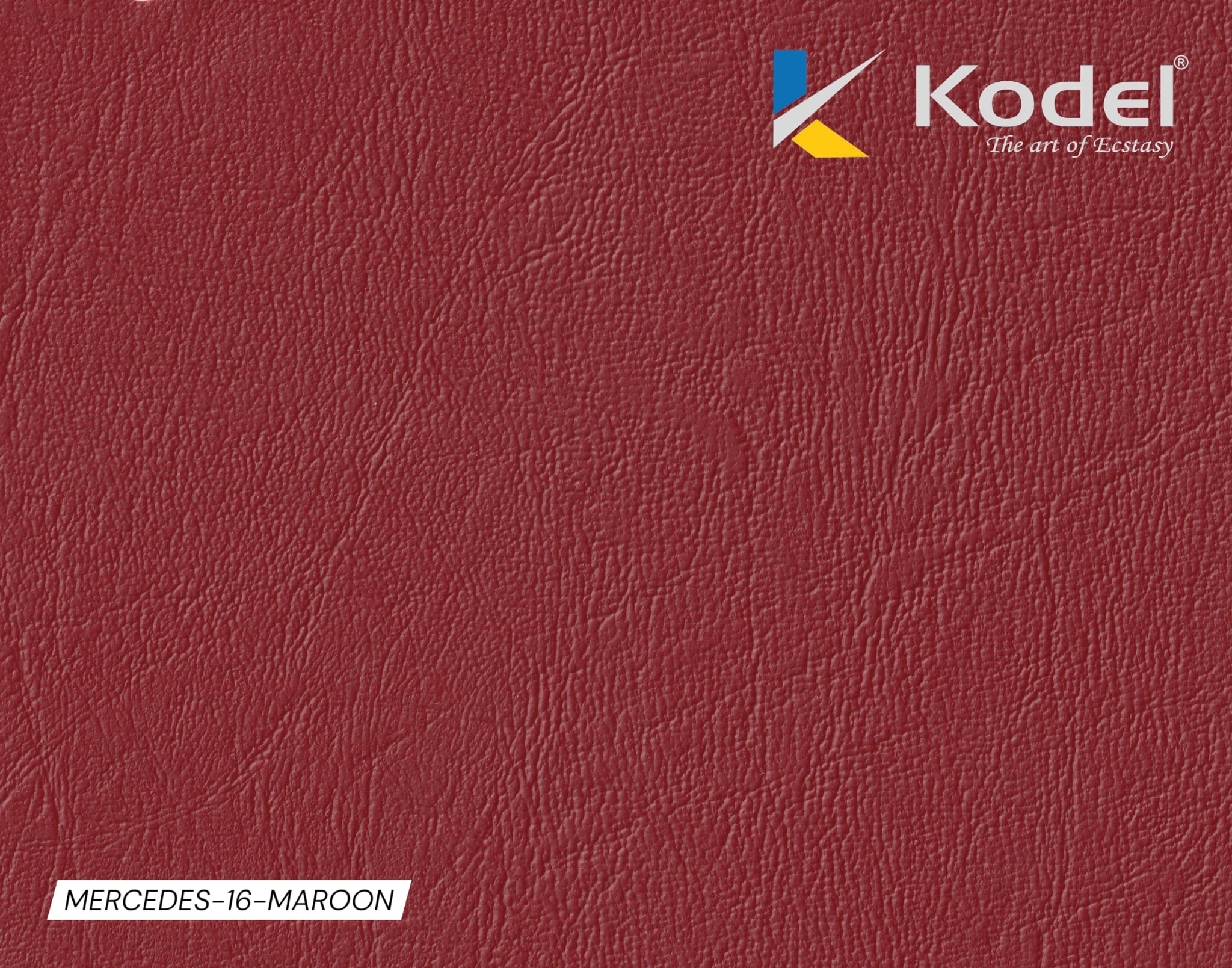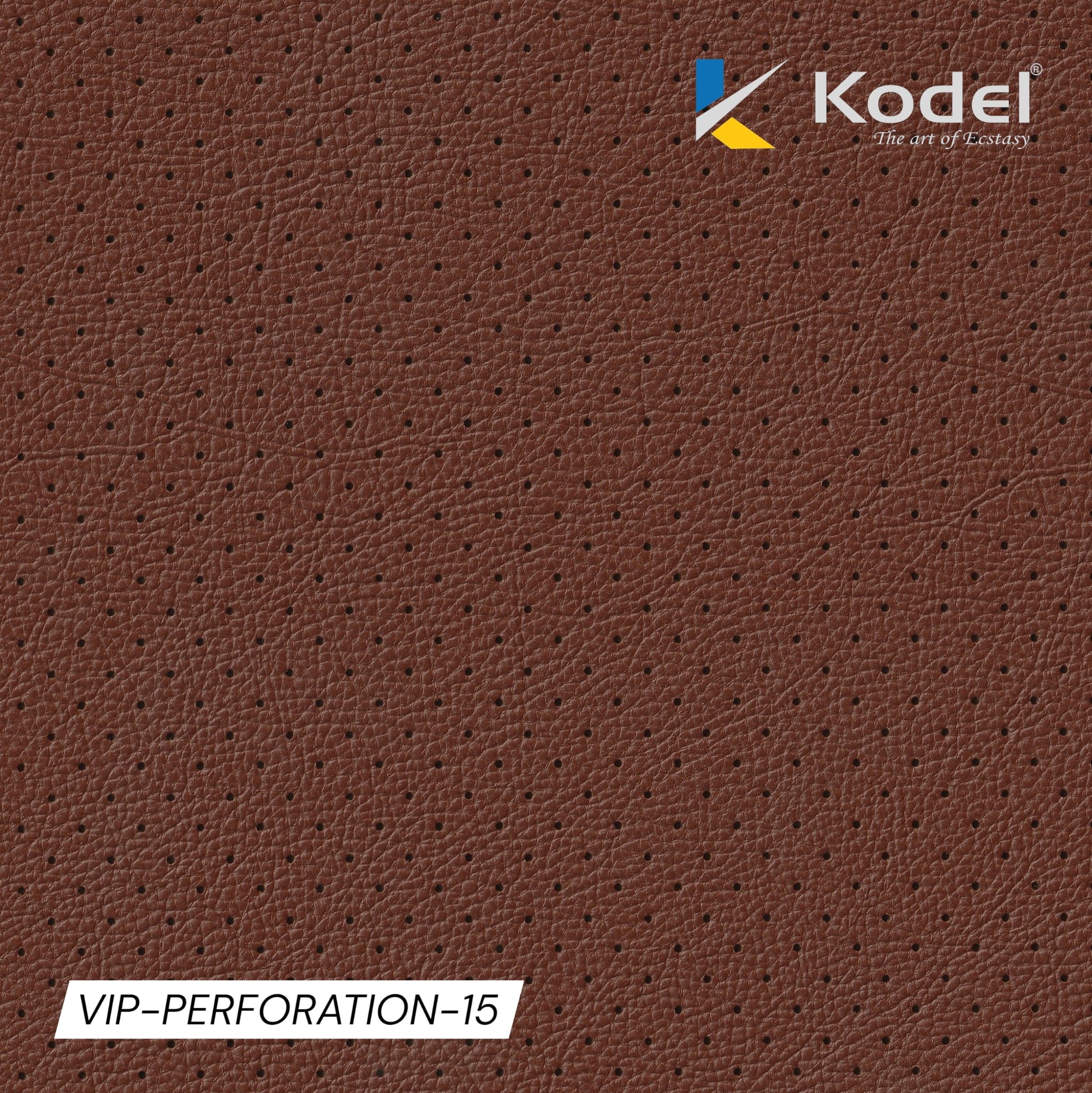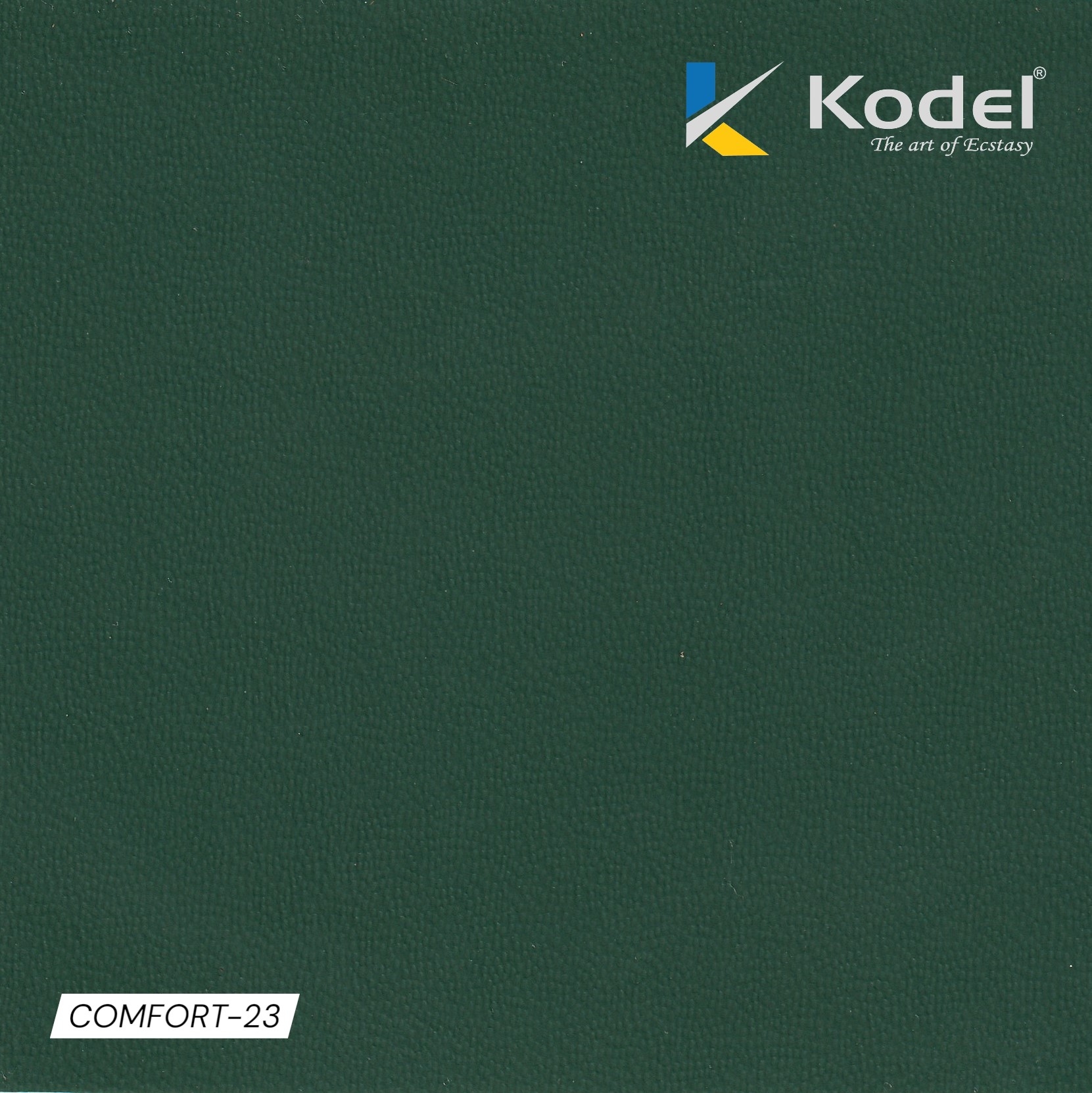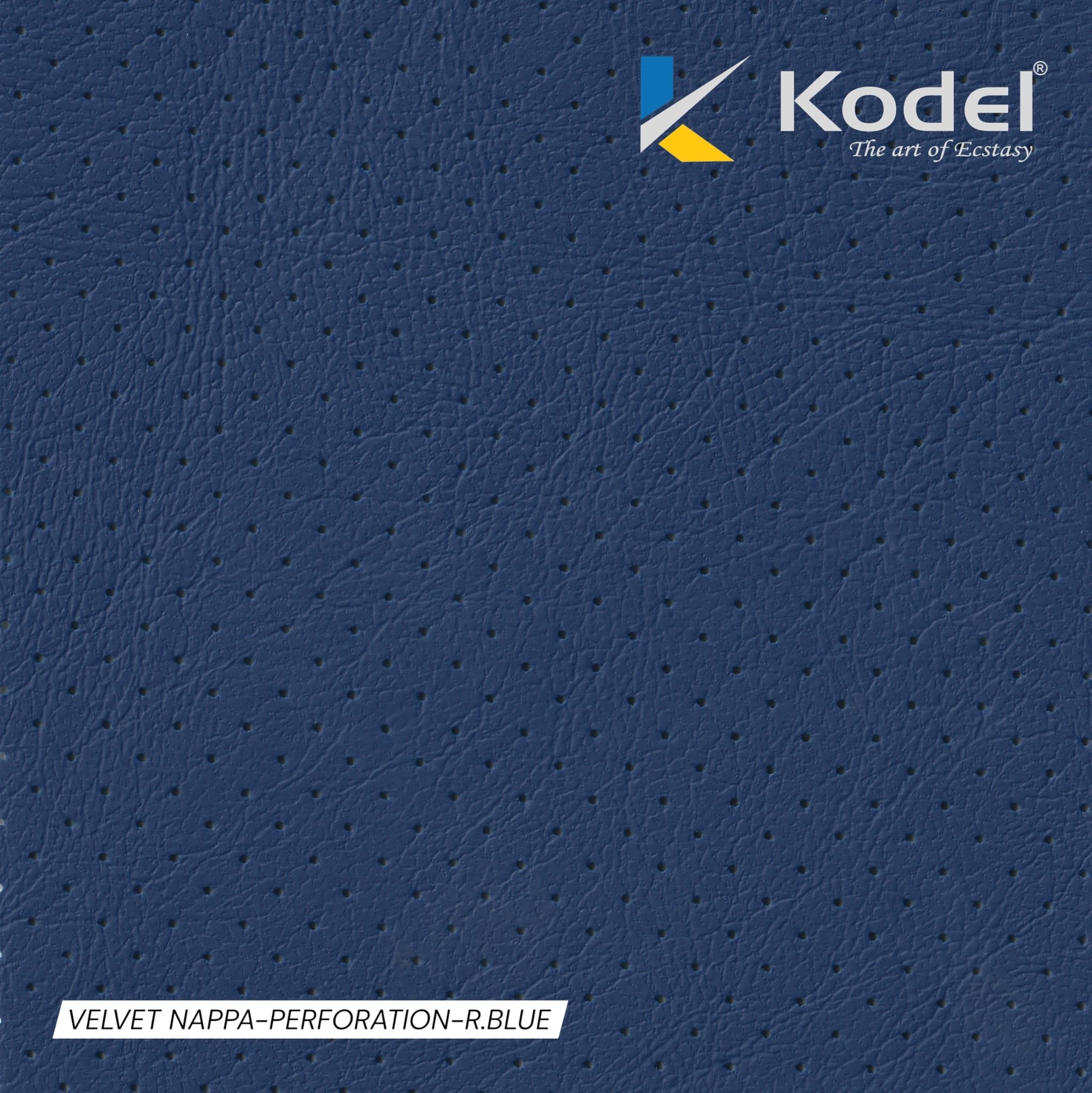
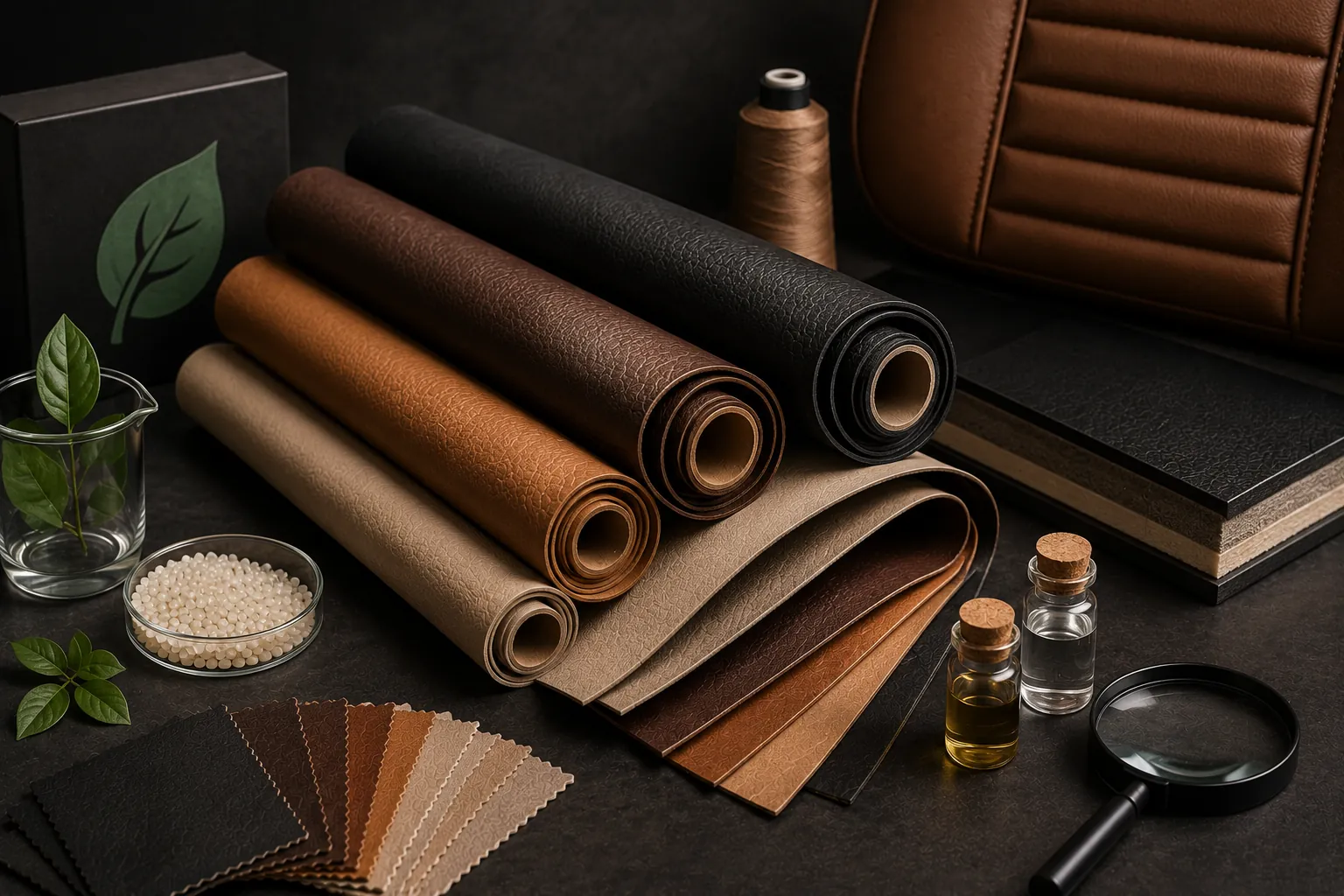
Vegan leather is no longer a niche product category marketed to ethical consumers. The global vegan leather market was valued at approximately 53 billion US dollars in 2024, according to Allied Market Research, with B2B procurement from furniture, automotive, hospitality, and fashion sectors driving the bulk of that volume. Kodal Decorative supplies synthetic and bio-based vegan leather to manufacturers, OEMs, and fit-out contractors across India and export markets, with material types spanning standard PU and PVC grades through to performance-grade TPU and partially bio-content options.
The term 'vegan leather' covers a broader material category than most buyers initially expect. Any leather-alternative material produced without animal hides qualifies, which means a single product label can describe a low-cost PVC upholstery fabric, a 60 percent bio-content castor oil-derived PU used by premium furniture brands, and a lab-grown mycelium composite being piloted by luxury fashion houses. This guide maps the category as it actually exists at commercial scale in 2026: what the materials are, where they perform, what they cost, and what manufacturers need to know before specifying them.
Why the Term "Vegan Leather" Covers Multiple Materials
The label 'vegan leather' is a market-facing descriptor, not a technical specification. It signals the absence of animal-derived content but says nothing about the underlying chemistry, substrate, performance profile, or environmental impact of the material. A buyer specifying 'vegan leather' without further qualification is in the same position as a buyer specifying 'metal' for a structural component.
At manufacturing scale in 2026, four material families carry the vegan leather label with meaningful commercial availability. Polyurethane (PU) synthetic leather is the dominant category by volume, produced by coating a knit or woven textile substrate with a polyurethane layer. Polyvinyl chloride (PVC) leather, the older of the two synthetic categories, is widely used in commercial and institutional applications. Bio-based vegan leather, produced using polyols derived from plant feedstocks such as castor oil, corn starch, or sugarcane, represents a growing share of premium procurement. And emerging alternatives, including mycelium-based materials (Bolt Threads' Mylo), pineapple leaf fibre composites (Pinatex by Ananas Anam), and apple waste-derived materials, are in limited commercial production but not yet available at the volumes or price points accessible to most B2B buyers.
Manufacturers selecting vegan leather for a product line need to specify against performance criteria, not category labels. The material that satisfies a hotel upholstery specification is unlikely to be the same one that satisfies a luxury handbag specification or an automotive interior requirement, even if all three are marketed as ‘vegan leather.’
PU Vegan Leather: The Default B2B Specification
Polyurethane vegan leather is the most widely specified synthetic leather type for premium and mid-market B2B applications. The manufacturing process applies a polyurethane coating to a knitted or woven fabric base, with the coating formulated to control softness, elongation, surface texture, and durability. Post-coating, embossing rollers press grain patterns into the surface under heat, producing finishes that range from smooth matte to deep full-grain textures across the same base material.
For furniture manufacturers, PU vegan leather in standard grades achieves 30,000 to 50,000 Martindale abrasion cycles, which satisfies contract furniture specifications. Premium grades supplied by Kodal Decorative reach above 60,000 cycles with enhanced coating formulations. Colour fastness to light (ISO 105-B02) at grade four and above is achievable in standard PU grades, with UV-stabilised formulations reaching grade five for outdoor-adjacent applications. PU vegan leather can be produced in virtually any colour, emboss pattern, or thickness specification between 0.5mm and 2.0mm, making it the most versatile vegan leather category for B2B procurement.
The main limitation of PU vegan leather is hydrolysis sensitivity in humid or tropical environments. Standard PU grades will show surface degradation within three to five years under sustained high-humidity conditions if the formulation does not include hydrolysis stabilisers. Buyers procuring for hospitality applications in high-humidity climates, including coastal and tropical locations, should specify hydrolysis-resistant PU grades and request ISO 1419 test data from the supplier.
PVC Vegan Leather: Performance at Commercial Scale
Polyvinyl chloride vegan leather is the material category that established synthetic leather as a viable commercial product from the 1970s onwards. PVC leather applies a thermoplastic polyvinyl chloride coating to a woven or non-woven substrate, producing a material with higher surface hardness, greater chemical resistance, and lower cost than PU equivalents. These characteristics make PVC vegan leather the standard specification for institutional seating, public transport upholstery, office furniture, outdoor furniture, and marine applications.
In abrasion resistance terms, PVC vegan leather consistently outperforms standard PU grades. Commercial PVC upholstery fabric routinely achieves 100,000 Martindale cycles or above, which is why local authority contracts, NHS frameworks, and educational institution procurement commonly specify PVC-coated upholstery as the minimum standard for high-traffic seating. Chemical resistance testing (ISO 23231) demonstrates superior performance against cleaning agents, disinfectants, and common food and beverage stains relative to PU grades, a performance advantage that drives PVC specification in healthcare and food service environments.
The environmental caveat with PVC vegan leather is significant. PVC production involves chlorine chemistry, and historical PVC formulations used phthalate plasticisers now restricted under EU REACH regulation (SVHC list, updated June 2026). Current commercial PVC leather supplied through Kodal Decorative uses DINP or DOTP plasticisers, which are not subject to current REACH restrictions. Buyers specifying PVC for products destined for the EU or UK must request a REACH compliance statement confirming plasticiser identity and confirming absence of all currently restricted substances under Annex XVII.
Bio-Based Vegan Leather: What Manufacturers Can Actually Source in 2026
Bio-based vegan leather is the fastest-growing subcategory of the vegan leather market, driven by brand sustainability commitments, EU ecodesign regulation pressure, and corporate net-zero procurement policies. The category encompasses materials where a portion of the fossil-derived chemistry has been replaced with bio-derived content, measured under ASTM D6866 as a percentage of total carbon from renewable sources.
The commercially available bio-based PU leathers that Kodal Decorative sources for B2B buyers fall into two bio-content tiers. Materials in the 20 to 35 percent bio-content range use castor oil-derived polyols as partial replacements for petrochemical polyols in the PU formulation. These materials are broadly available at price premiums of 15 to 25 percent above equivalent conventional PU grades, with no significant compromise in physical performance. Materials in the 40 to 60 percent bio-content range, produced by Toray Industries and Ultrafabrics among others, achieve higher bio-content through more extensive reformulation and command price premiums of 30 to 50 percent above conventional equivalents.
Manufacturers making sustainability claims about products using bio-based vegan leather must anchor those claims in documented data. The European Commission's Green Claims Directive (proposed 2023, phased implementation beginning 2026) prohibits vague environmental claims without substantiation. A claim that a product uses 'sustainable vegan leather' is not compliant with the directive without documented bio-content percentage, test methodology, and third-party verification. Kodal Decorative provides ASTM D6866 bio-content declarations with each bio-based material order, and buyers should retain these documents as part of their product compliance file.
Emerging Vegan Leathers: Mycelium, Pineapple, and Apple Waste
Mycelium leather, pineapple fibre composites, and fruit waste-derived materials receive substantial media coverage and appear in product announcements from brands including Stella McCartney, H&M, and Adidas. The commercial reality in 2026 is more constrained than the coverage implies. Bolt Threads' Mylo mycelium material is in limited production with a small number of luxury brand partners and is not available for open B2B procurement. Ananas Anam's Pinatex pineapple leaf fibre material is commercially available in select volumes through approved distributors, primarily targeting fashion accessories and footwear, with pricing substantially above synthetic alternatives.
Apple waste-derived vegan leather, produced from apple skin and core byproduct of juice manufacturing by suppliers including Vegtus and Frumat, is available in limited volumes from European distributors. The material achieves commercially acceptable abrasion resistance for fashion accessories but does not yet meet the durability standards required for furniture or automotive upholstery at scale. Water resistance and hydrolysis performance of fruit-waste leathers remain technically inferior to both PU and PVC synthetic grades under standardised testing.
Manufacturers evaluating these emerging materials for product development should treat them as innovation materials with limited volume availability, higher cost, and less established performance documentation than synthetic vegan leather grades. For production volumes above a few hundred metres, lead times from emerging material producers are typically measured in months rather than weeks, and MOQ structures are not designed for the commercial B2B procurement scale that synthetic leather suppliers operate at. The performance gap is narrowing but it has not closed.
How Kodal Decorative Supplies Vegan Leather to B2B Buyers
Kodal Decorative operates as a manufacturer and sourcing partner for vegan leather across the full PU, PVC, bio-based PU, and TPU material range. The supply model is designed for B2B manufacturers, OEMs, and procurement teams rather than retail end-buyers, with MOQ structures, sampling protocols, and documentation packages suited to production-scale procurement.
Standard PU and PVC vegan leather grades are held in stock in a core range of colours and emboss patterns, with MOQs of 100 metres per colour enabling buyers to source across multiple colourways without large minimum commitments per shade. Custom colour development against Pantone, RAL, or physical reference is available with a minimum of 300 metres per colour and a seven-to-ten working day development cycle. Custom emboss tooling for proprietary grain patterns is available at a minimum of 3,000 metres per design. For buyers requiring FR-certified vegan leather for transport, healthcare, or commercial hospitality applications, batch-level fire test certification covering BS5852 Crib 5, FMVSS 302, and ECE R118 is available against order.
The procurement documentation package provided by Kodal Decorative with each B2B order includes material safety data sheet (MSDS), REACH compliance statement, relevant physical performance test reports from the applicable grade standard, and for bio-based materials, the ASTM D6866 bio-content declaration. Buyers with specific compliance requirements for export markets (EU, UK, US, GCC) should provide the compliance checklist at enquiry stage so the documentation package is confirmed before order placement.
Specifying Vegan Leather as a Manufacturer Requires More Than a Label
The vegan leather category has reached sufficient commercial maturity that buyers no longer need to compromise on performance, availability, or documentation when specifying it. PU and PVC synthetic grades supply the full range of durability, colour, compliance, and scale requirements that manufacturing and institutional procurement demand. Bio-based grades offer credible sustainability differentiation for brands that need documented renewable content rather than category-level claims. Emerging materials are worth monitoring but are not ready for production-scale specification in most B2B contexts.
What has not kept pace with material development is procurement practice. Buyers who specify 'vegan leather' without grade, thickness, performance parameters, and compliance documentation requirements are making the same specification error as buyers who relied on the genuine leather category label to guarantee quality. The label is not the specification. The performance data, test certificates, and compliance documentation are the specification.
Kodal Decorative supplies vegan leather with full procurement documentation as standard. Buyers who bring clear performance requirements to the sampling stage receive material that is fit for production from the first confirmed order. The category is there. The materials work. The procurement process is what determines whether they perform.