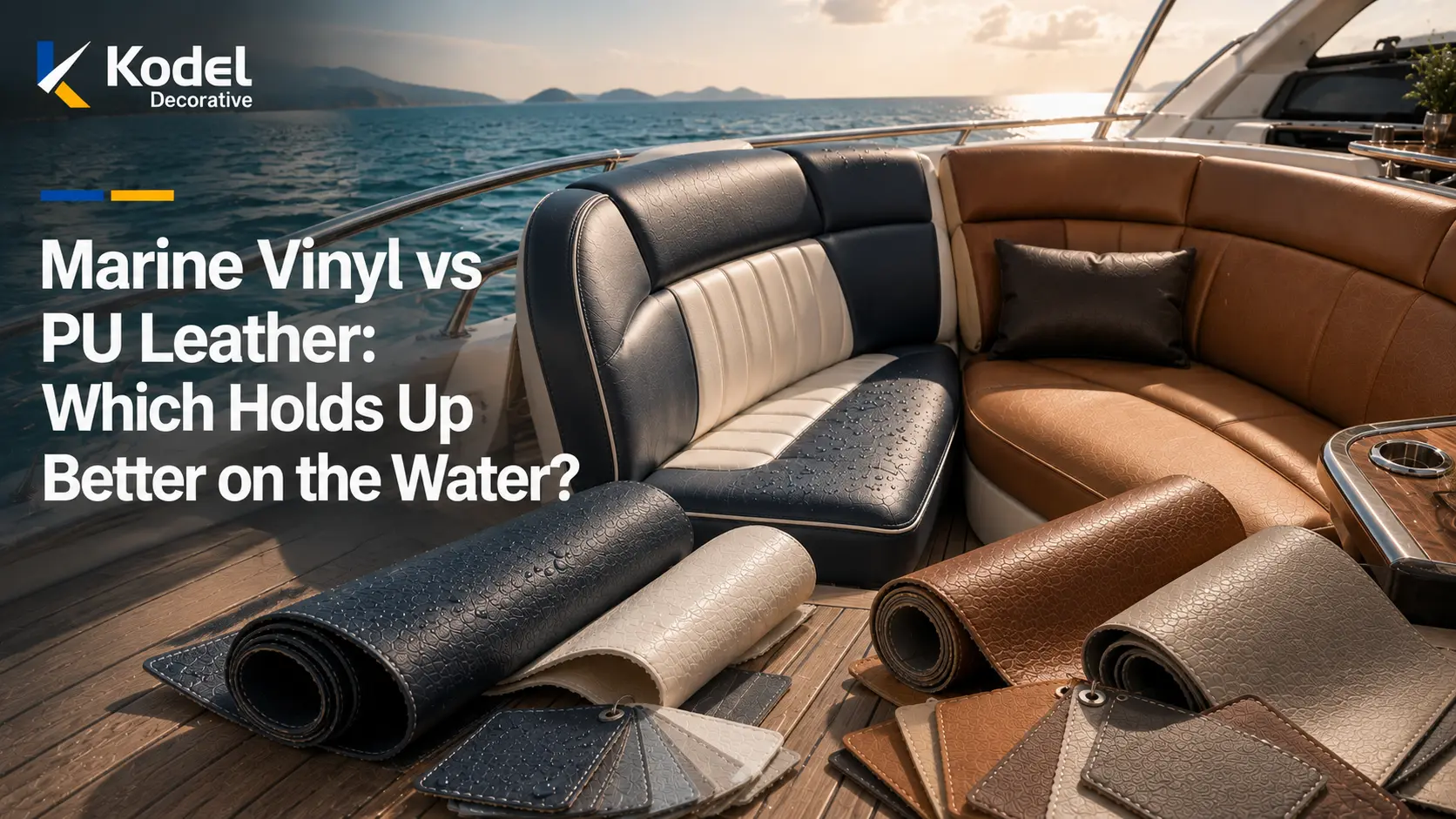
A center console fishing boat builder specifying seating for a work-focused vessel prioritizes raw abrasion and water resistance above all else, favoring marine vinyl's proven track record. A luxury day cruiser builder, competing on interior finish quality as much as performance, increasingly specifies marine-grade PU leather for its softer feel and finer aesthetic. Both choices can be correct, because marine vinyl and PU leather trade durability characteristics differently under the same water, sun, and salt exposure.
This comparison breaks down where marine vinyl and PU leather genuinely differ for boat upholstery, so builders can specify by vessel type and use case rather than by habit.
What Separates Marine Vinyl From PU Leather at the Material Level
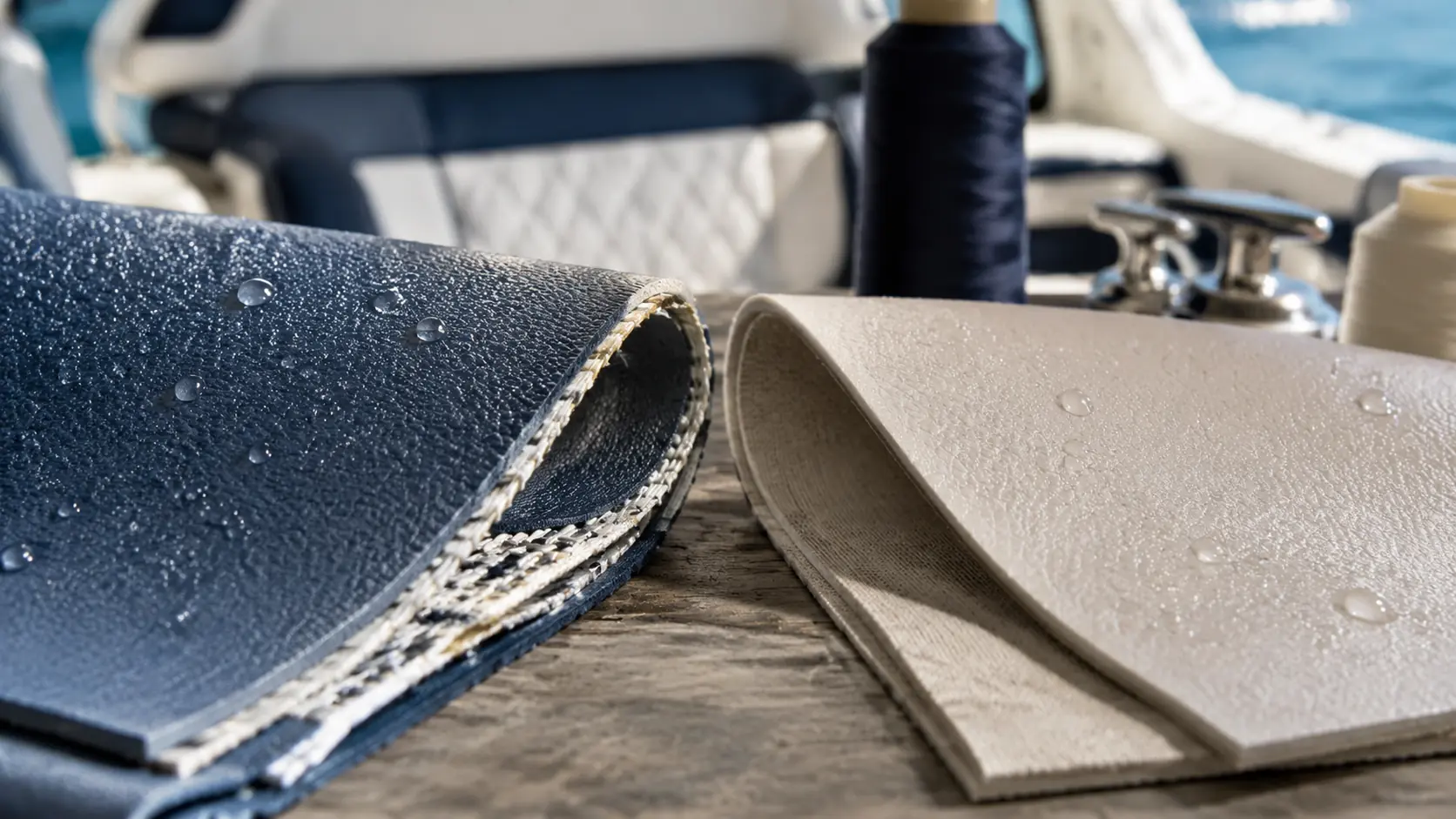
Marine vinyl is a PVC-based coating specifically formulated and reinforced for water resistance, typically with a thicker, more rigid construction than standard PVC leather used indoors. Marine-grade PU leather uses a thinner, more flexible polyurethane coating adapted with UV and salt-resistant additives for marine use, following the same base construction logic covered in our comparison of PU, PVC, and microfiber leather applied to a marine-specific formulation.
Head-to-Head: UV, Water, Abrasion, and Hand-Feel
| Factor | Marine Vinyl | Marine-Grade PU Leather |
| Water resistance | Excellent | Good to excellent when properly sealed |
| UV resistance (stabilized) | Excellent | Good |
| Abrasion resistance | High | Moderate |
| Hand-feel | Firmer, more utilitarian | Softer, more premium |
| Weight | Heavier | Lighter |
| Typical cost per meter | Lower to mid-range | Mid-range to higher |
Where Marine Vinyl Wins
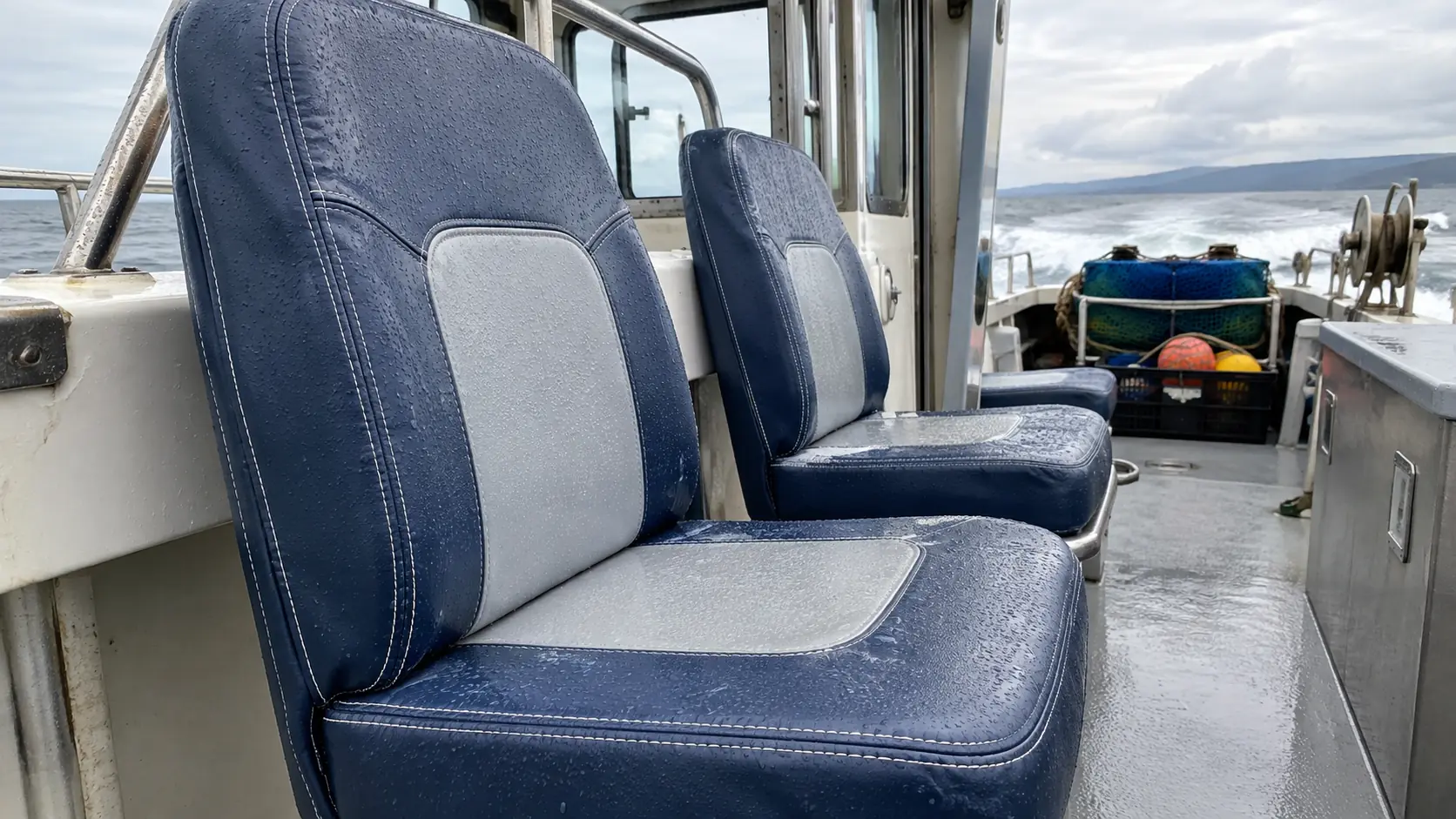
Marine vinyl remains the stronger choice for high-abrasion, heavy-use applications such as work boats, fishing vessels, and rental fleet seating, where raw durability against constant abrasion and water exposure outweighs finish quality. Its typically lower cost per meter also makes it the more budget-efficient choice for large-volume production where every seat does not need a premium finish.
Where PU Leather Wins
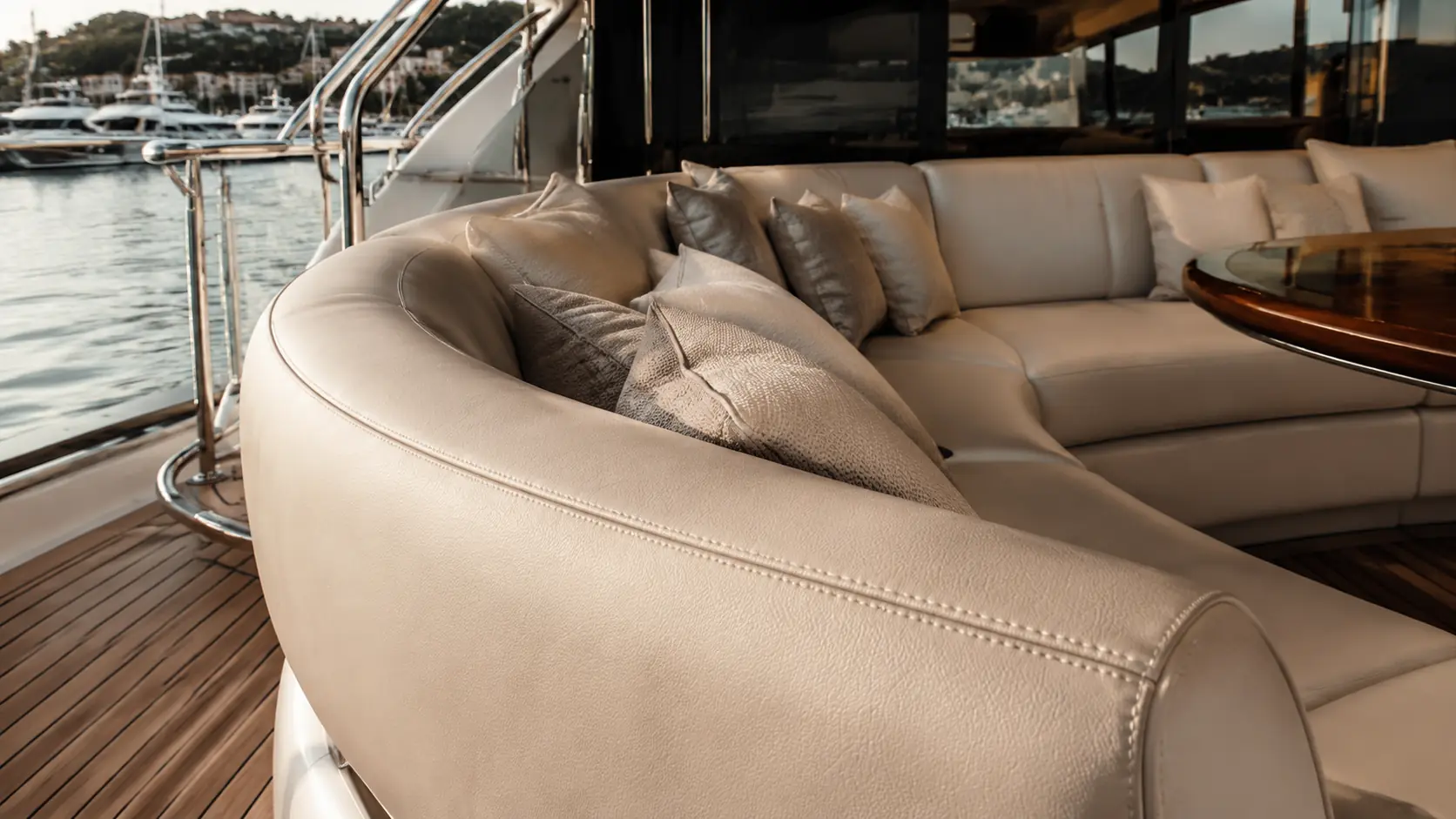
Marine-grade PU leather wins for premium day cruisers, yachts, and any vessel where interior finish quality is a competitive differentiator, since its softer hand-feel and finer grain options read as considerably more upscale than marine vinyl. Builders considering this switch should review our industries sourcing synthetic leather from Thailand, which covers marine as one of several industries where material choice increasingly reflects brand positioning as much as raw performance.
Which to Specify and When
Specify marine vinyl for work-focused vessels and high-abrasion, budget-sensitive applications where raw durability matters most. Specify marine-grade PU leather for premium and luxury vessels where interior finish quality directly affects buyer perception and competitive positioning. A wholesale pu leather fabric supplier stocking both material families lets builders compare samples directly before committing to a specification for a new build program.
Two Materials, Two Different Priorities
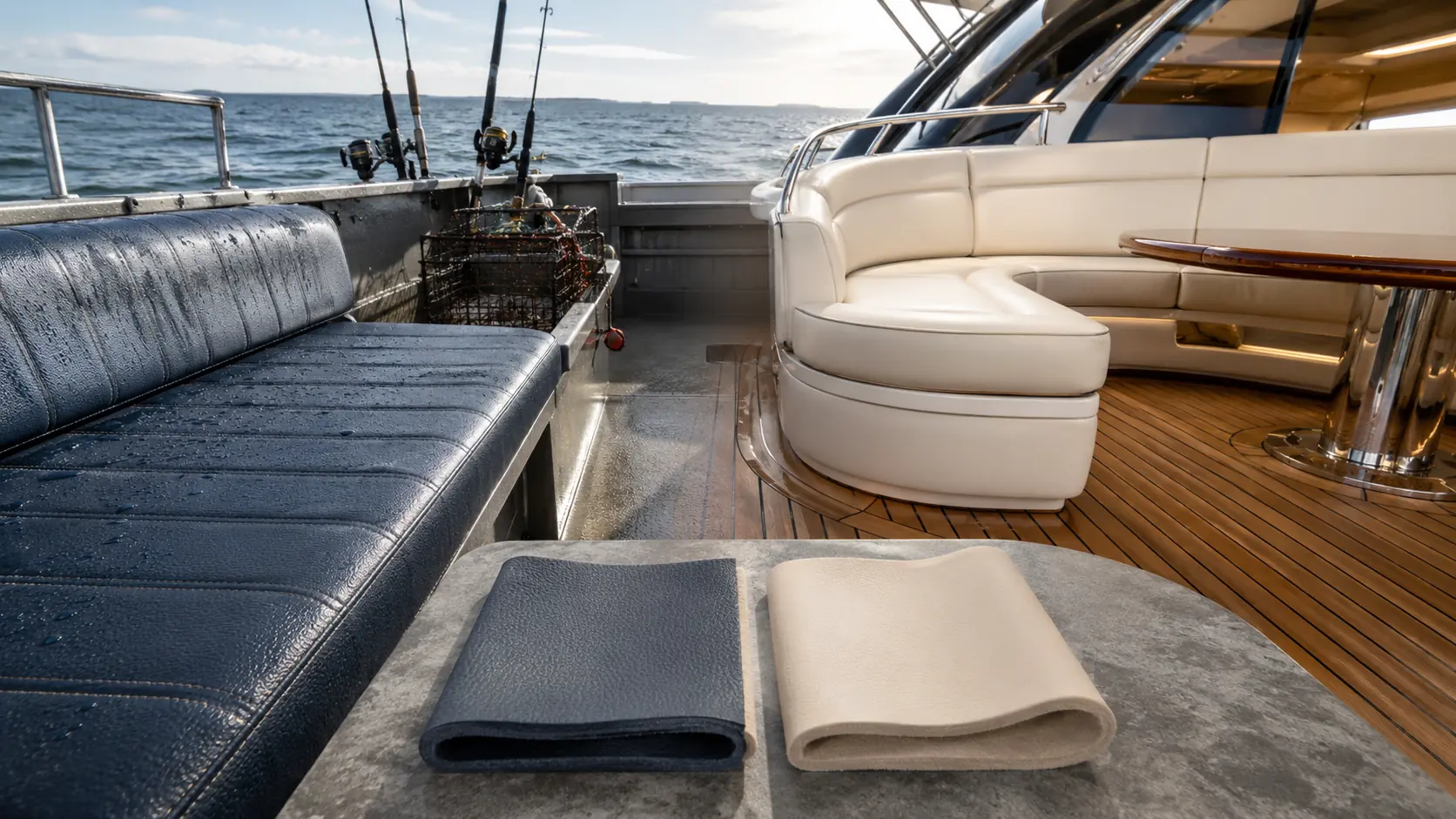
Marine vinyl and PU leather are not competing to be the single best marine material; they serve different priorities depending on vessel type and target buyer. Builders who specify by component and use case, rather than defaulting to whichever material their yard has always used, consistently deliver interiors that better match what their specific customers actually value.
Compare Marine Materials Directly
Kodel Decorative supplies both marine vinyl and marine-grade PU leather from its Bangkok facility, with samples available to compare hand-feel and durability side by side. Start your comparison: call 0 98 005 8863 or email kodeldecorative@gmail.com. Explore current marine options at Marine Vinyl leather collection.