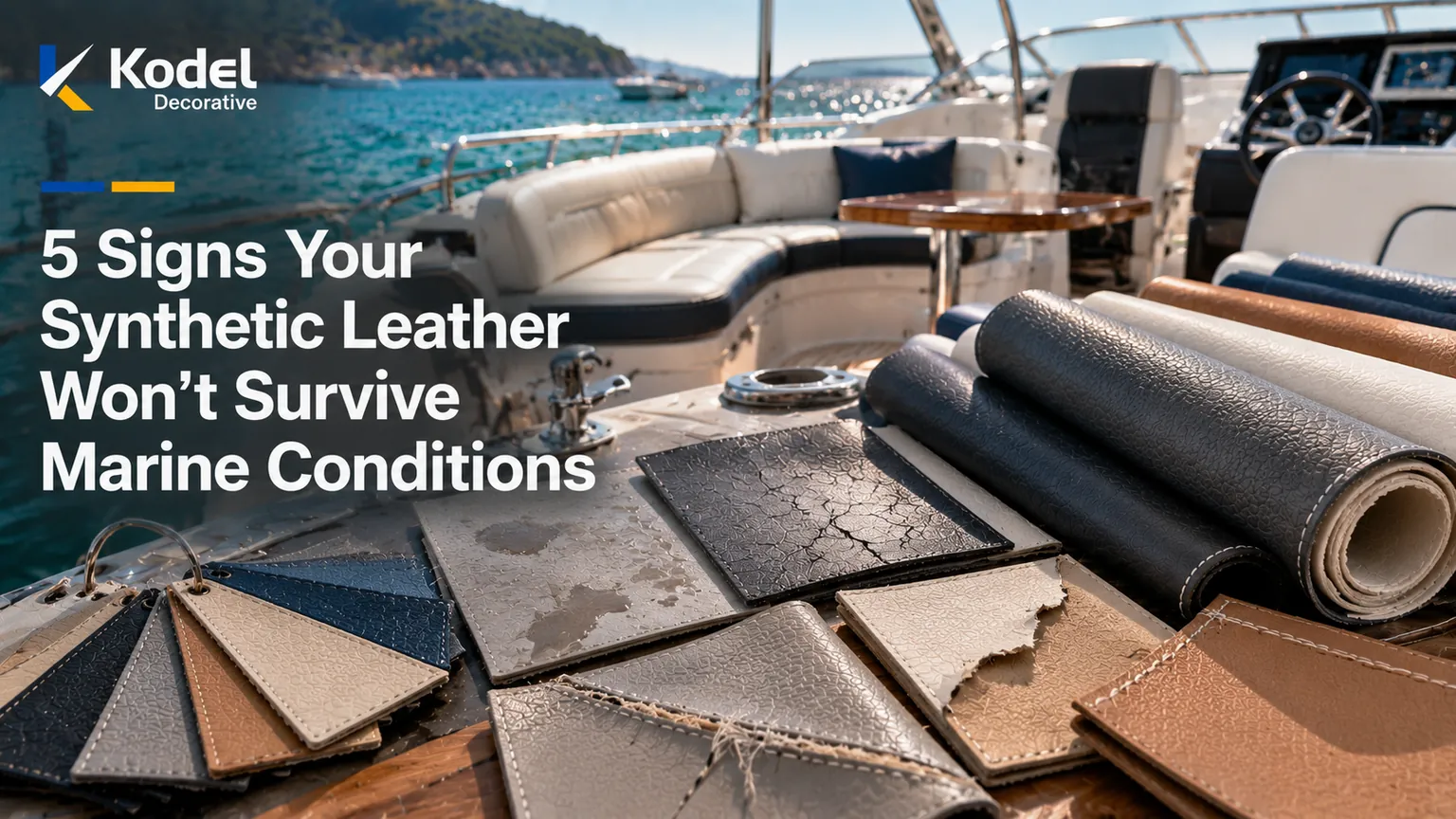
A boat seat reupholstered with the wrong material can look identical to a properly specified marine-grade seat on delivery day, then show fading, cracking, or mildew within a single season on the water. The failure is rarely obvious until the material has already been in service, which is why catching the warning signs before installation, not after, matters far more for marine applications than for almost any other use of synthetic leather.
The five signs below indicate a material is not actually built for marine use, regardless of how it is marketed. For the testing standards a properly formulated marine-grade material should meet, see our guide to marine-grade synthetic leather standards.
5 Warning Signs Your Synthetic Leather Isn't Marine-Ready
1. The Supplier Can't Provide UV Weathering Test Data
If a supplier describes a material as UV resistant but cannot provide the specific accelerated weathering hours it was tested against, treat that as a warning sign rather than a minor documentation gap. Materials without this data are frequently formulated for general indoor use and only marketed as marine-suitable after the fact.
2. There's No Salt Spray Test Result Available
Salt exposure degrades coatings differently than UV alone, and a material that has only been tested for UV resistance has not actually been validated against the salt spray conditions a boat interior faces daily. Ask specifically for salt spray test duration, not a general assumption of marine suitability.
3. The Backing Fabric Is a Standard Indoor Cotton Blend
A standard cotton-blend backing retains moisture in humid marine conditions, accelerating mildew growth and coating delamination regardless of how resistant the surface coating itself is. Confirm the backing is specifically treated or constructed for moisture resistance before specifying a material for marine use.
4. The Coating Feels Stiff or Brittle Straight Out of the Sample Package
A coating that already feels stiff or shows early signs of surface hardening in a fresh sample is unlikely to maintain flexibility after months of heat and UV cycling on a boat. Flex the sample by hand and check for any resistance or surface crazing before approving it for a marine order.
5. The Product Description Uses "Marine-Grade" Without Any Supporting Specification
A product listed simply as marine-grade, with no accompanying technical specification for UV hours, salt spray duration, or backing construction, is a label without substance until a supplier can back it up with documentation. Our 10 questions to ask before a wholesale leather order covers this same principle for wholesale orders generally, and it applies with particular importance to marine-grade claims.
What to Do If You Spot These Signs
If a supplier shows any of these warning signs, request the specific test documentation directly before proceeding, and consider it grounds to look elsewhere if the documentation cannot be produced. A pu leather supplier thailand with genuine marine-grade formulations will have this data readily available rather than treating the request as unusual.
Catch the Warning Signs Before Installation, Not After
Every one of these five signs is checkable before a material is ever installed on a boat, which means every marine leather failure they predict is preventable with the right questions asked at the sourcing stage. Boat manufacturers and upholsterers who build these checks into their standard sourcing process consistently avoid the field failures that unverified marine-grade claims produce.
Get Verified Marine-Grade Material
Kodel Decorative provides documented UV, salt spray, and backing test results for its marine-grade leather from its Bangkok facility, so you never have to guess. Request documentation today: call 0 98 005 8863 or email kodeldecorative@gmail.com. Browse marine grade material leather collections.