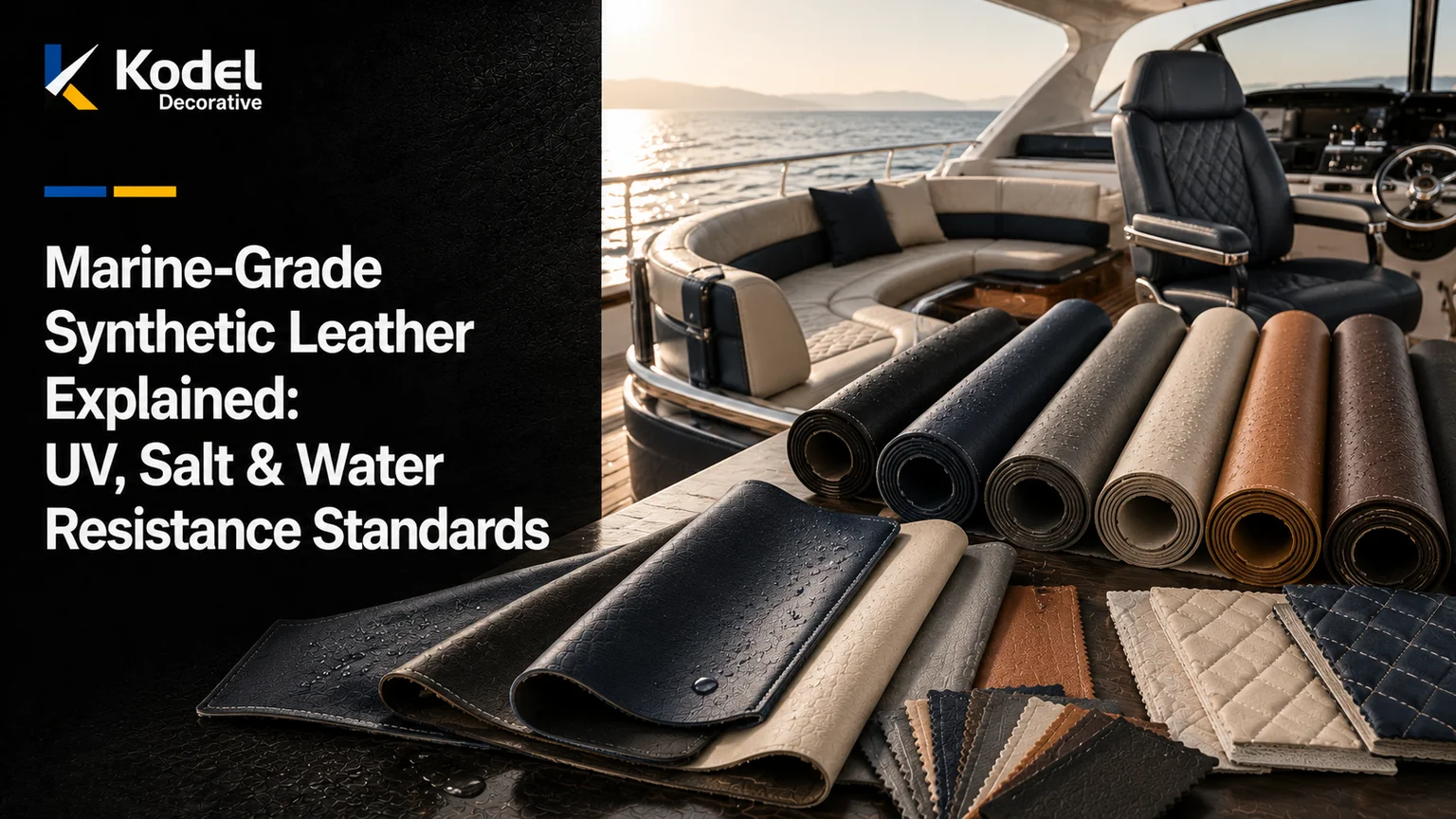
Marine-Grade Synthetic Leather Explained: UV, Salt & Water Resistance Standards
A boat seat upholstered in standard indoor synthetic leather can show visible fading and surface cracking within a single season on the water, while the same style of seat built from properly formulated marine-grade material holds its color and flexibility for years under the same sun, salt spray, and moisture cycling. The difference is not the base material category; PU and PVC leather both appear in marine applications. The difference is whether the specific formulation was engineered and tested against the stresses a boat interior actually faces.
This guide explains what marine-grade synthetic leather actually is, the UV, salt, and water resistance standards it needs to meet, and how boat builders should evaluate a supplier's marine-grade claims before specifying material for a build.
Why Marine Environments Demand a Different Material Standard
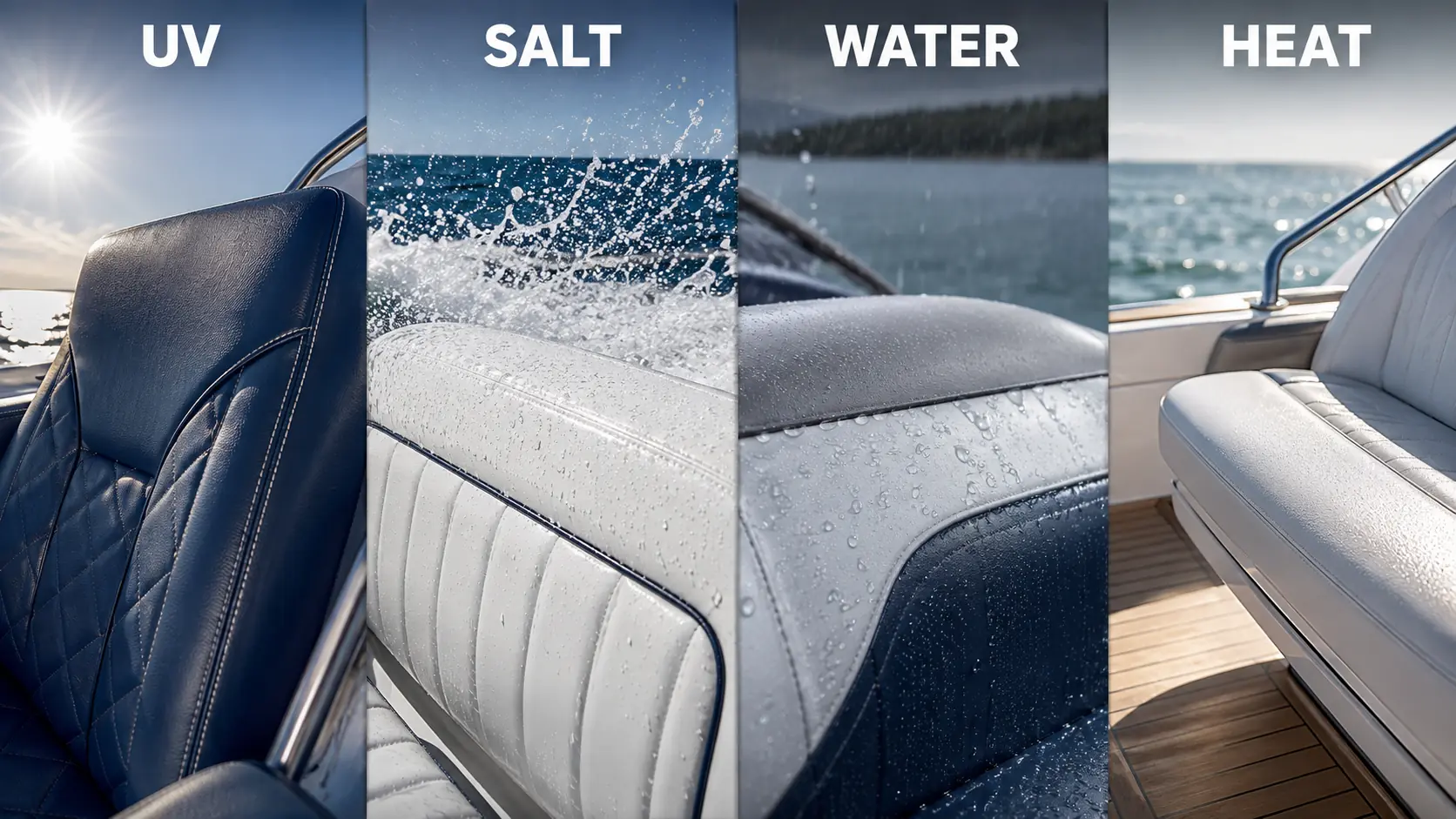
A boat interior faces a combination of stresses that few other applications encounter simultaneously: constant direct UV exposure with little to no shade, repeated salt spray that accelerates coating degradation, sustained moisture exposure from spray, rain, and humidity, and wide temperature swings between a hot deck surface and cooler water-level air. Any one of these stresses alone would be manageable for standard synthetic leather; the combination, repeated daily across a multi-year service life, is what separates marine-grade requirements from general upholstery.
UV Resistance Standards for Marine-Grade Leather
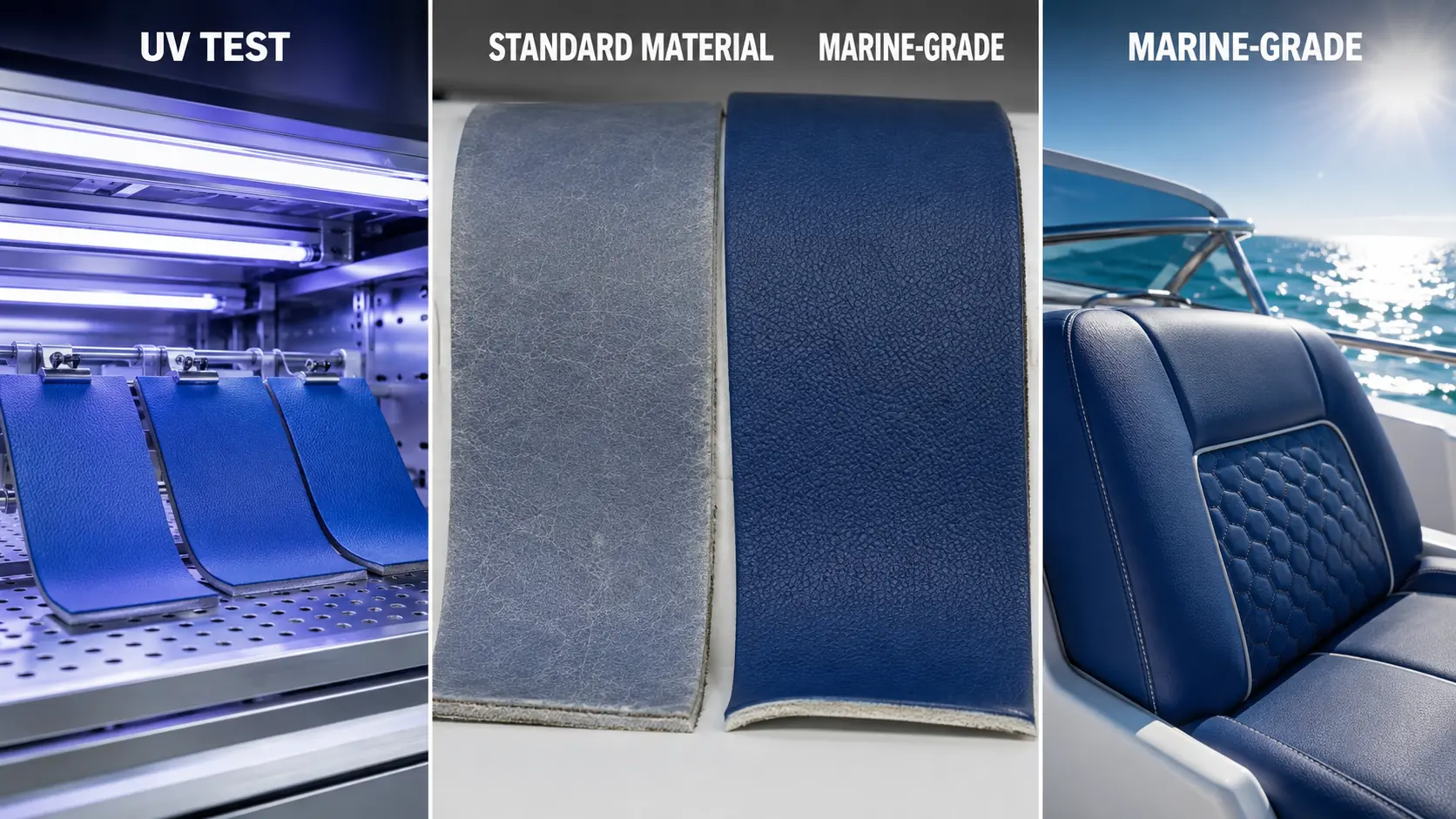
Marine-grade coatings include UV stabilizing additives specifically formulated to resist the fading, chalking, and surface hardening that untreated PU or PVC develops under sustained direct sun exposure. Suppliers test this resistance through accelerated weathering chambers that simulate months of UV exposure in a matter of days, reporting results as color change and surface integrity after a defined number of exposure hours, a figure worth requesting directly rather than accepting a general UV-resistant label.
Salt and Water Resistance Testing
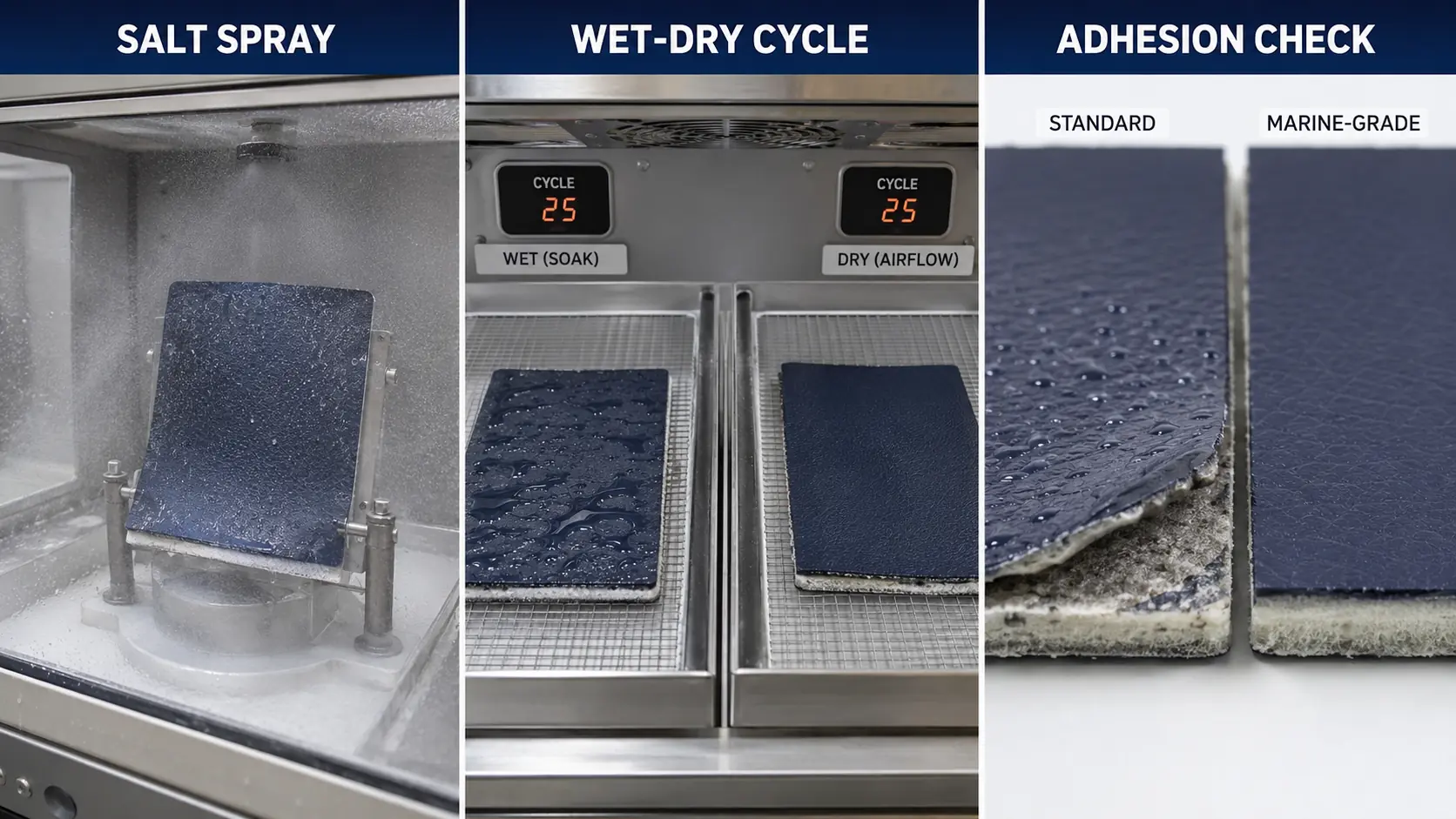
Salt spray testing exposes a material sample to a controlled saline mist over an extended period, evaluating whether the coating degrades, discolors, or loses adhesion to its backing under conditions that replicate ocean spray exposure. Water resistance testing evaluates whether sustained moisture exposure causes the backing fabric to degrade, mildew, or delaminate from the coating, a failure mode that shows up as bubbling or peeling at the surface after repeated wet-dry cycling.
Backing and Construction Requirements for Marine Use
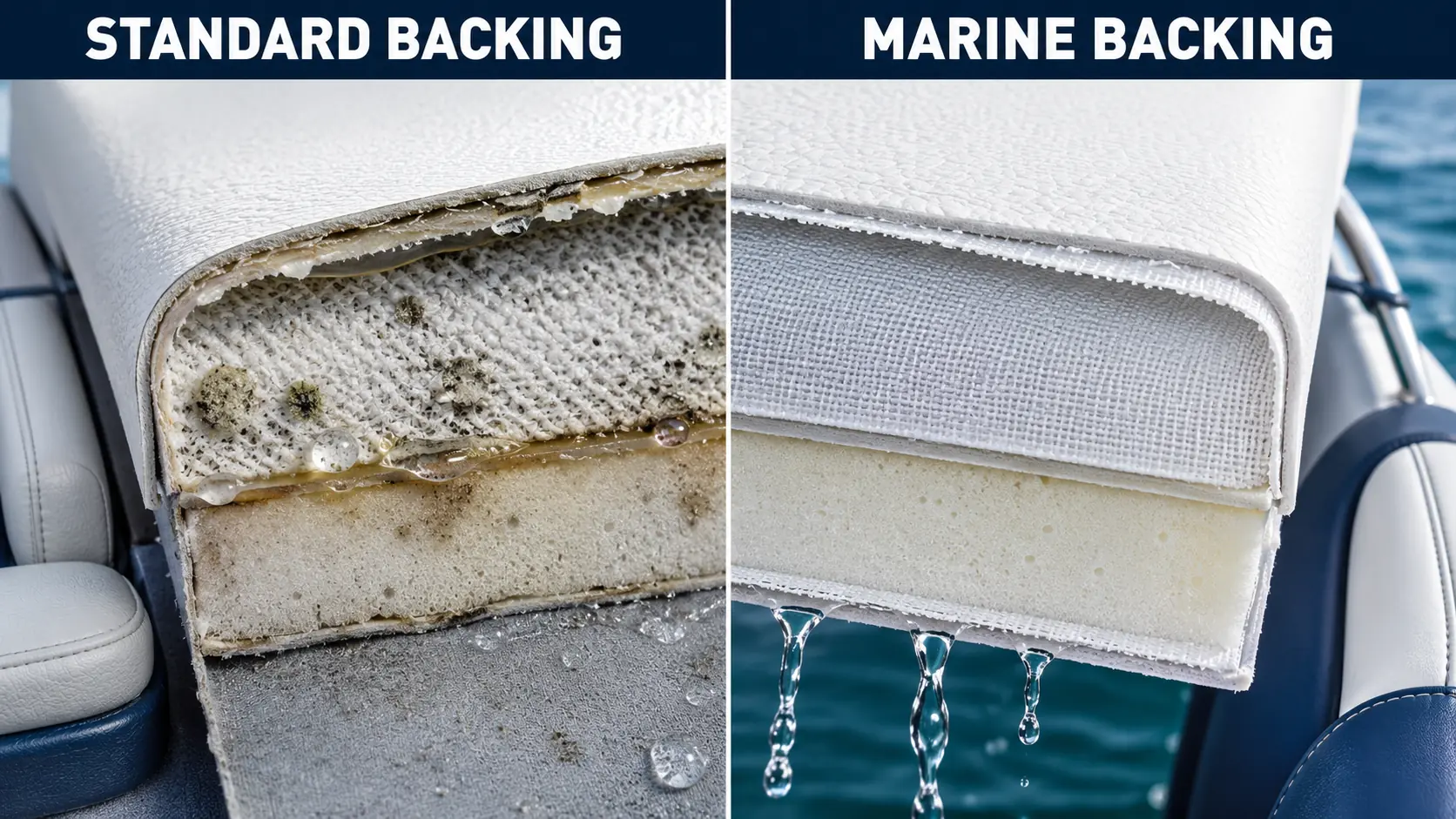
Marine-grade material typically uses a mildew-resistant, quick-drying backing fabric rather than a standard cotton-blend backing, since a backing that retains moisture accelerates mildew growth and coating delamination in humid marine conditions. For a broader material comparison covering backing and coating differences across categories, see our comparison of PU, PVC, and microfiber leather, which applies to marine specification decisions as well.
How to Verify a Supplier's Marine-Grade Claims
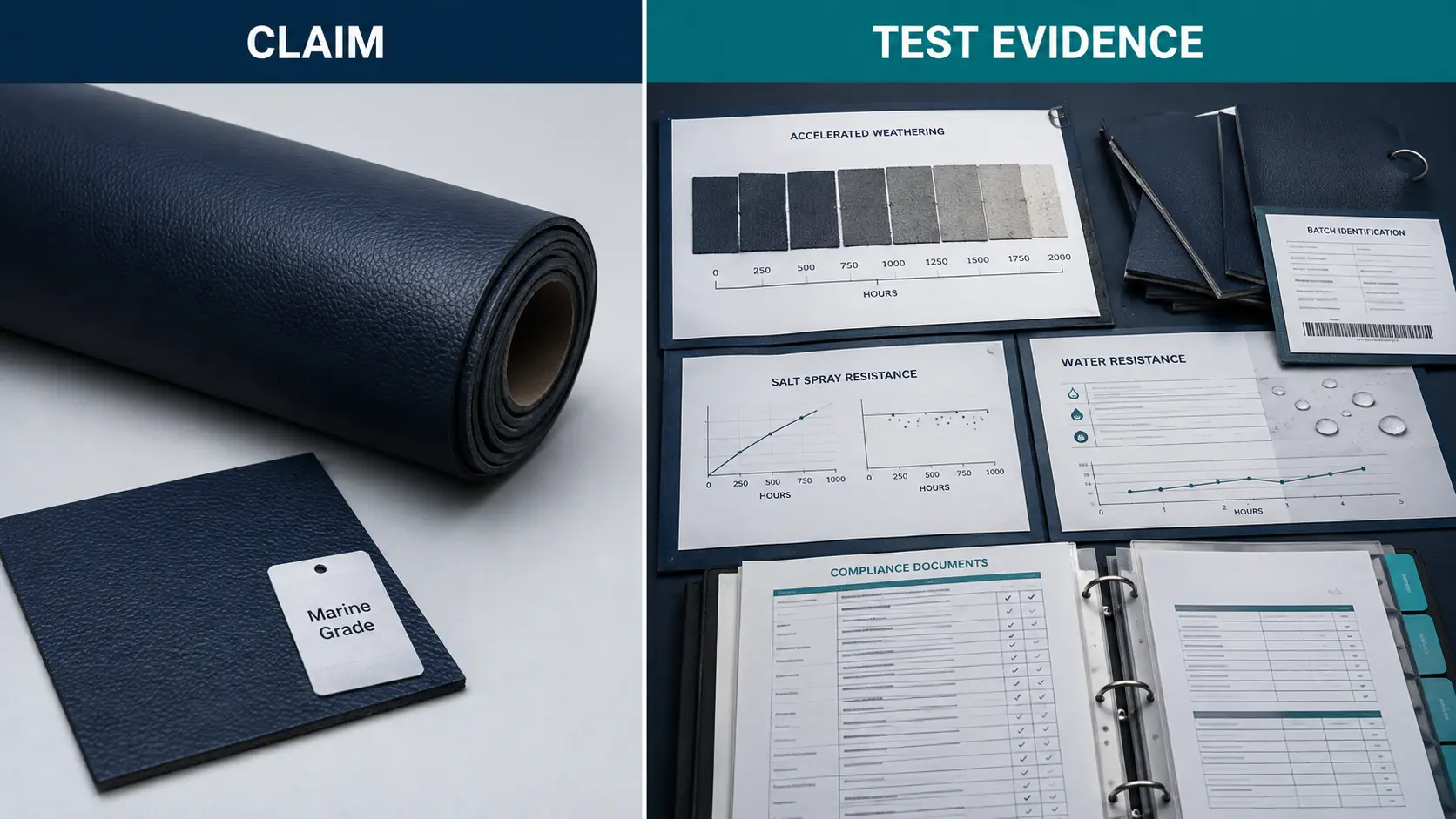
Ask for documented test results against specific standards rather than accepting a general marine-grade label on a product description, and request the accelerated weathering hours or salt spray duration the material was actually tested against. A reach certified leather supplier should be able to produce this documentation directly rather than relying on a verbal assurance of marine suitability.
Sourcing Marine-Grade Leather for Boat Production
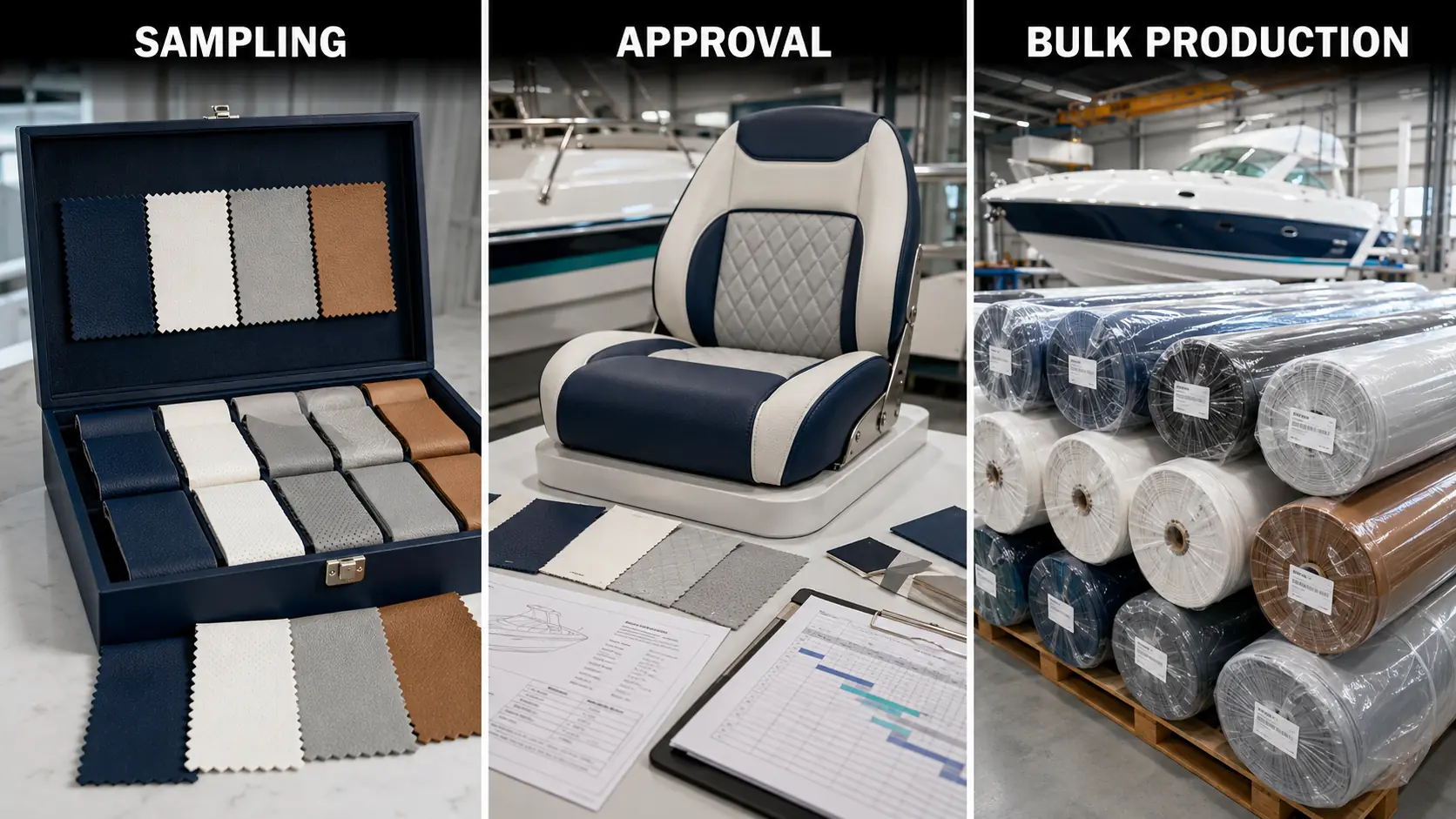
Boat builders sourcing marine-grade leather at production volume should confirm MOQ, sampling, and lead time separately from standard indoor upholstery orders, since marine-grade formulations often require dedicated production runs. Our wholesale buyer's guide to MOQ, sampling, and OEM covers the general sourcing process that applies to marine orders as well, including what to expect at each stage from specification through production.
Marine-Grade Is a Specification, Not a Marketing Term
The label marine-grade only means something when it is backed by documented UV, salt, and water resistance testing against a specific standard, not simply used as a general descriptor on a product page. Boat builders who request this documentation before specifying material avoid the costly outcome of discovering a coating failure only after a season on the water.
As boat interiors continue to move toward synthetic leather over traditional marine vinyl, working with a supplier that can speak to these standards in technical detail becomes an increasingly important part of the sourcing decision.
Source Verified Marine-Grade Material
Kodel Decorative supplies UV-stabilized, salt-resistant marine-grade leather from its Bangkok facility, with test documentation available on request. Start your marine material sourcing: call 0 98 005 8863 or email kodeldecorative@gmail.com. Browse marine-relevant collections at kodeldecorative.com/collection.