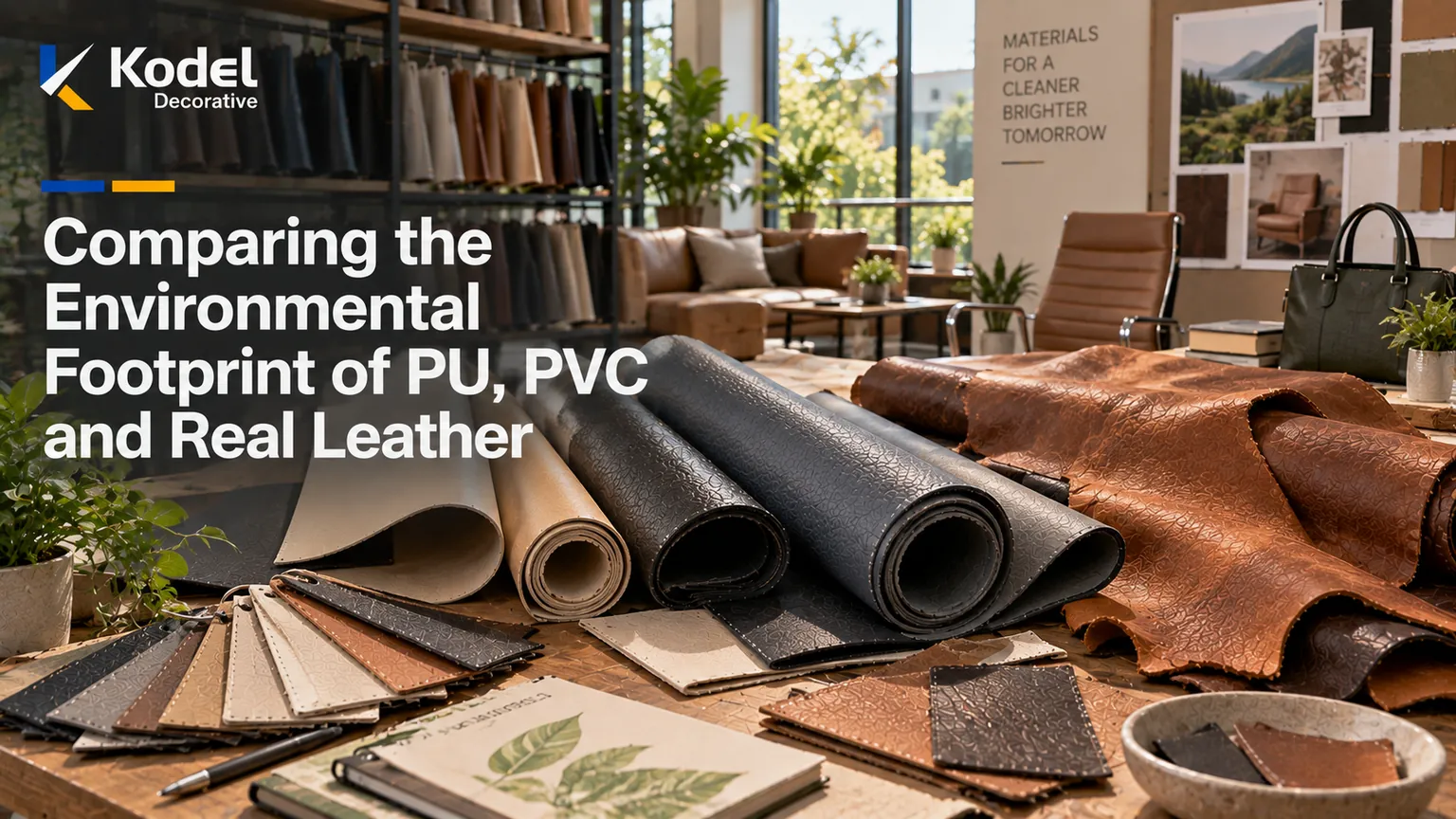
A brand comparing PU, PVC, and real leather on sustainability grounds quickly discovers there is no single clean winner; each material carries a different environmental burden depending on which stage of its lifecycle is being measured. A custom synthetic leather supplier thailand that understands these tradeoffs in detail can help buyers make an informed choice rather than relying on a single oversimplified sustainability claim.
This comparison breaks down where PU, PVC, and real leather actually differ on environmental impact, covering production inputs, water use, chemical processing, and end-of-life considerations.
Production Inputs and Raw Material Sourcing
Real leather's environmental footprint begins with livestock production, which carries well-documented land use, water consumption, and methane emission impacts independent of the tanning process itself. PU and PVC leather instead rely on petrochemical inputs, avoiding the livestock supply chain entirely but introducing their own environmental considerations tied to fossil fuel extraction and polymer production.
Water Use and Chemical Processing
Traditional chrome tanning, used to process the majority of genuine leather globally, is water and chemical intensive, and improperly managed tannery effluent has been linked to water pollution in several producing regions. PU and PVC coating processes also use water and chemical inputs, though generally at different volumes and with different discharge profiles; our PU vs PVC vs microfiber guide covers the coating process each material relies on in more technical detail.
Durability and Its Effect on Lifecycle Impact
A material's total environmental impact depends not just on production but on how long it lasts in use, since a durable material replaced less frequently can offset a higher initial production footprint over its service life. Well-formulated PU and PVC leather can match or exceed real leather's practical service life in many applications, an important factor often left out of simplified environmental comparisons.
End-of-Life and Biodegradability Considerations
Real leather is biodegradable under the right conditions, though chemical tanning residues can slow this process considerably, while standard PU and PVC leather do not biodegrade and require different end-of-life management, typically incineration or landfill. A reach certified leather supplier with documentation on responsible chemical formulation can at least confirm that a synthetic material's non-biodegradability is not compounded by additional toxic residue concerns.
So Which Material Actually Has the Lower Footprint?
There is no single correct answer independent of the specific supplier, production process, and end use being evaluated, which is why credible environmental comparisons rely on lifecycle assessment data rather than a blanket claim that one material category is universally greener. Our vegan vs real leather guide covers additional factors brands should weigh before making a public sustainability claim in either direction.
No Universal Winner, Only Tradeoffs to Weigh
The environmental comparison between PU, PVC, and real leather does not resolve into a single winner; it resolves into a set of tradeoffs that shift depending on which impact category matters most for a specific brand or product. Buyers making sustainability-driven material decisions should request documentation over marketing language and weigh durability alongside production impact for a fuller picture.
Brands serious about this evaluation benefit from working directly with a vegan leather b2b supplier able to discuss these tradeoffs with technical specificity rather than a general environmental claim.
Get the Full Environmental Picture
Kodel Decorative can walk buyers through the environmental and compliance profile of its PU and PVC leather collections from its Bangkok facility. Start the conversation: call 0 98 005 8863 or email kodeldecorative@gmail.com. Browse the collection at kodeldecorative.com/collection.