
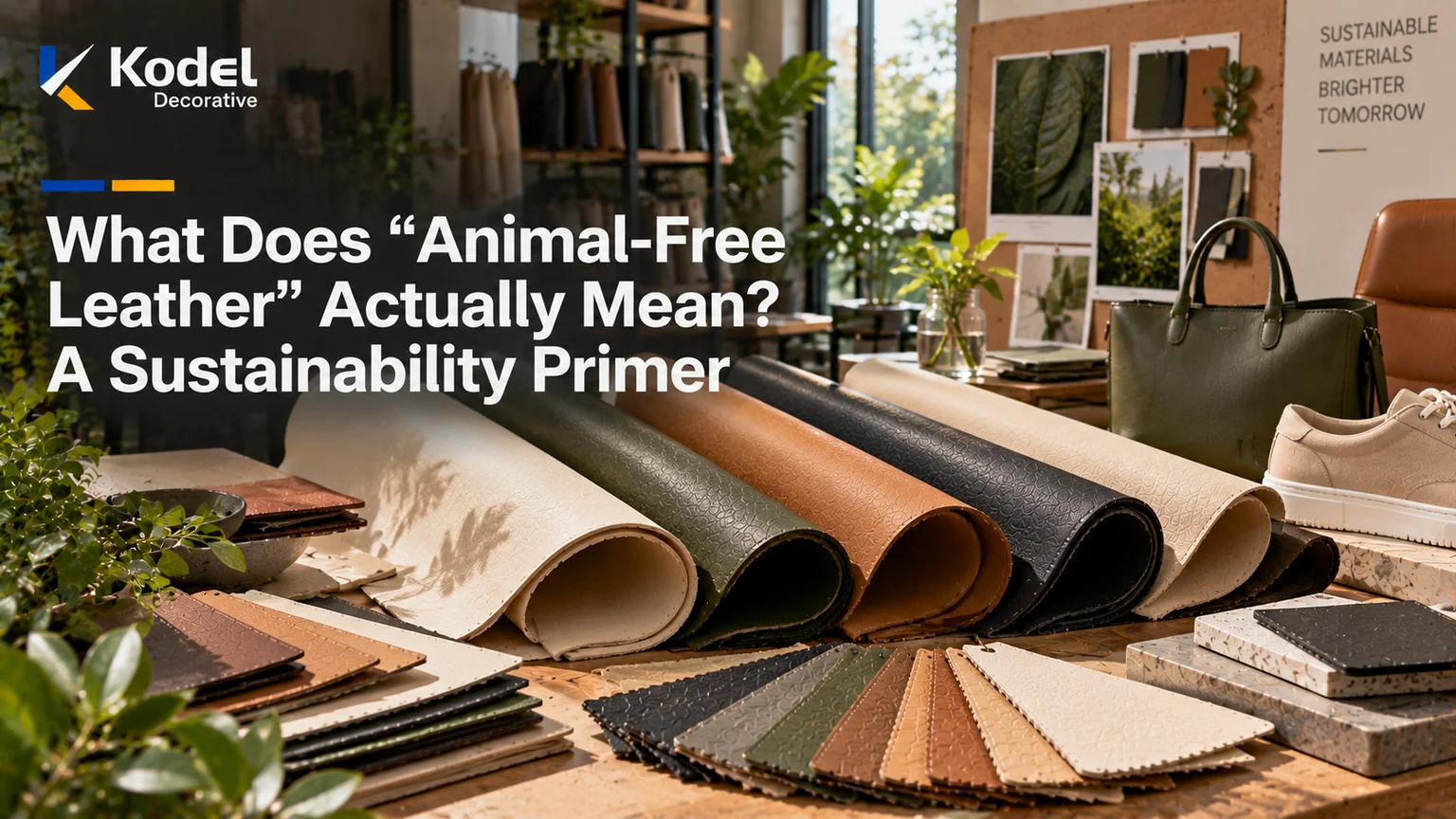
A shopper reading animal-free leather on a product tag might assume it refers to a single specific material, when in practice the term covers a wide range of constructions, from standard PU and PVC coatings to newer plant-based and bio-fabricated alternatives, each with different performance and sustainability profiles. Choosing the right one starts with a microfiber leather supplier that can explain exactly what construction and base material sits behind its animal-free label.
This primer breaks down what animal-free leather actually means, the different material categories it covers, and how to evaluate whether a specific animal-free product meets the sustainability standard it claims.
The Basic Definition: No Animal-Derived Material
Animal-free leather, at its most basic, means the material contains no animal-derived components anywhere in its construction, including the backing fabric, coating, and any finishing treatments. This distinguishes it from bonded leather, which uses genuine hide scraps bound with a synthetic binder and does not qualify as animal-free despite sometimes being marketed in a way that obscures its animal content.
PU and PVC Leather as Animal-Free Materials
Standard PU and PVC leather are both fully synthetic and qualify as animal-free by definition, since neither uses any animal-derived component in their coating or, typically, their backing fabric. Our vegan leather breakdown covers how these materials are actually manufactured for readers unfamiliar with the underlying process.
Microfiber Leather and Its Animal-Free Construction
Microfiber leather, built from a nonwoven polyester fiber base impregnated with polyurethane, is similarly animal-free while offering a fiber structure and hand-feel closer to genuine hide than standard PU or PVC. This has made it a popular choice for brands seeking an animal-free material that does not compromise on premium finish quality.
Newer Plant-Based and Bio-Fabricated Alternatives
A growing category of materials made from agricultural byproducts, such as cactus, mushroom mycelium, and fruit waste, are also marketed as animal-free leather, though these materials vary considerably in durability, availability, and cost compared with established PU, PVC, and microfiber options. A phthalate free leather supplier can typically advise on which animal-free category best fits a specific product's performance and budget requirements.
How Animal-Free Differs From Vegan Marketing Claims
Animal-free describes the material's composition, while a vegan marketing claim can sometimes extend further to include supply chain and manufacturing process considerations that go beyond the base material alone. Our vegan vs real leather guide covers the broader distinctions brands should understand before making either claim publicly.
One Label, Several Different Materials
Animal-free leather is not a single material but a category covering everything from well-established PU and PVC leather to newer plant-based alternatives still proving out their durability at scale. Buyers and brands should look past the label to the specific material construction behind it before making performance or sustainability assumptions.
Working with a synthetic leather manufacturer thailand that can clearly explain which animal-free category a given product falls into removes the guesswork from this increasingly crowded part of the material market.
Explore Animal-Free Material Options
Kodel Decorative supplies PU, PVC, and microfiber animal-free leather from its Bangkok facility, with full material construction details available on request. Start the conversation: call 0 98 005 8863 or email kodeldecorative@gmail.com. Browse the collection at kodeldecorative.com/collection.


